In Depth
Location and Accessibility
Maguri Beel lies approximately 3 km from the Guijan Ghat, which serves as one of the main entry points to Dibru-Saikhowa National Park. It is around 15 km from Tinsukia town and can be easily reached by road. The nearest railway station is Tinsukia Junction, and the closest airport is Dibrugarh Airport, around 50 km away.
Ecological Significance
Named after the local Magur fish (catfish) found in abundance here, Maguri Beel is part of the larger Brahmaputra floodplain ecosystem. It is connected to the Lohit River, a major tributary of the Brahmaputra, making it an ideal breeding ground for both aquatic life and migratory birds.
A Haven for Birdwatchers
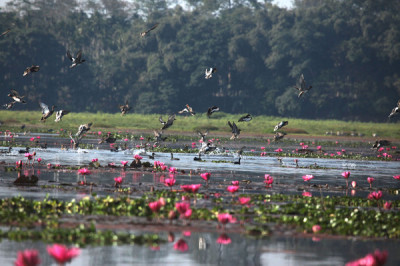
Maguri Beel is internationally recognized as an Important Bird Area (IBA). Over 300 species of birds have been recorded here, including several rare and endangered species. Some of the birds spotted include:
-
Ruddy Shelduck
-
Ferruginous Duck
-
Baikal Teal
-
Greater Adjutant Stork
-
Pied Harrier
-
Swamp Francolin
-
Yellow Bittern
-
Marsh Babbler
During winter, it becomes a migratory shelter for numerous waterfowl and raptors, attracting birdwatchers and ornithologists from all over the world.
Activities and Attractions
-
Boat Safari: Explore the wetland on traditional country boats, guided by local boatmen. Ideal for photography and birdwatching.
-
Birdwatching Tours: Led by local experts, perfect for both amateur and professional birders.
-
Eco-tourism Stays: Stay at nearby homestays or eco-resorts run by local communities, offering an immersive rural experience.
-
Nature Walks: Take guided walks along the beel’s edge and through adjacent grasslands to observe flora and fauna.
Best Time to Visit
The ideal time to visit Maguri Beel is between November and March, when migratory birds arrive in large numbers and the weather is pleasant.
Conservation and Community Involvement
Local communities play a vital role in conserving the wetland and promoting sustainable tourism. Many homestays and eco-tour packages are community-led, ensuring benefits reach the local people while protecting the region’s fragile biodiversity.
Conclusion
Maguri Beel is not just a birdwatcher’s paradise but also a living example of community-based conservation and nature-centric tourism. If you're seeking a peaceful escape into Assam’s wild beauty, full of birds, wetlands, and local hospitality, Maguri Beel in Tinsukia is a must-visit destination.