In Depth
Bordoibam Bilmukh Bird Wildlife Sanctuary Assam: Complete Travel Guide and Birdwatching Spot
The wetland was naturally formed after the 1950 Assam earthquake, when changes in the Subansiri River system created a vast floodplain lake. Though the river now flows about 7 km away, the sanctuary continues to function as a crucial wetland ecosystem supporting birds, fish, amphibians, reptiles, and aquatic vegetation. Sitting at an altitude of approximately 90 to 95 meters above mean sea level, the sanctuary experiences a moist tropical climate with average annual rainfall of around 2000 mm, making it an ideal habitat for migratory water birds.
Birds and Wildlife at Bordoibam Bilmukh Sanctuary
Bordoibam Bilmukh Bird Wildlife Sanctuary is primarily known for its rich avifaunal diversity, especially during the winter season when migratory birds arrive from northern Asia. The sanctuary serves as an important breeding ground for Large Whistling Teals and hosts many globally threatened and regionally significant bird species.
Common and notable birds recorded here include:
-
Large Whistling Teal
-
Spot-billed Pelican
-
Lesser Adjutant Stork
-
Greater Adjutant Stork
-
Pallas's Fish Eagle
-
Chestnut Bittern
-
Open-billed Stork
-
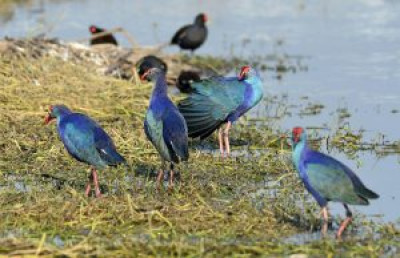
Purple Moorhen
-
Indian Roller
-
Black-headed Oriole
-
Kingfishers
-
Pheasant-tailed Jacana
-
Bronze-winged Jacana
-
Indian River Tern
-
Black-headed Gull
-
White Wagtail
Apart from birds, the sanctuary supports indigenous fish species, frogs, snakes, and other aquatic organisms, which together sustain the wetland food chain. Aquatic vegetation dominates the landscape, while semi-aquatic grasses and trees line the wetland banks, forming ideal nesting and feeding zones for water birds.
Ecological Significance and Conservation Challenges
Bordoibam Bilmukh Bird Wildlife Sanctuary holds exceptional conservation value due to its role in protecting wetland biodiversity in Upper Assam. However, scientific studies have recorded a significant decline in bird species diversity, with numbers dropping by more than 70 percent over the past three decades, from around 167 species in the late 1990s to fewer than 50 species in recent surveys. This decline is linked to human pressures such as fishing, egg collection, habitat degradation, and wetland encroachment.
Despite these challenges, the sanctuary remains a vital refuge for migratory waterfowl and threatened bird species, making conservation awareness and responsible tourism crucial for its long-term protection.
Best Time to Visit Bordoibam Bilmukh Bird Wildlife Sanctuary
The best time to visit Bordoibam Bilmukh Bird Wildlife Sanctuary is from December to February, when large numbers of migratory birds arrive, water levels are suitable for viewing, and weather conditions remain pleasant. Winter mornings offer the best birdwatching opportunities, while foggy wetlands and large waterbird flocks create excellent photography conditions.
Monsoon months are generally avoided due to heavy rainfall, flooding, and reduced accessibility.
How to Reach Bordoibam Bilmukh Bird Wildlife Sanctuary
By Air: The nearest airport is Lilabari Airport (North Lakhimpur), located approximately 54 km from the sanctuary.
By Rail: The nearest major railway station is North Lakhimpur Railway Station, connected to Guwahati and other towns in Assam.
By Road: The sanctuary is about 46 km southwest of Dhemaji town and is accessible by road from both Dhemaji and North Lakhimpur via local transport, taxis, and private vehicles.
Where to Stay Near Bordoibam Bilmukh Bird Wildlife Sanctuary
Accommodation facilities are best found in North Lakhimpur town, which offers reliable hotels and transport connections.
Recommended options include:
Hotel Greenview, Tirtheswar Hazarika Rd, Chetia Gaon, North Lakhimpur, Assam 787001, Phone : +91 - 3752 222 259
Hotel Moon Light, NH 52, North Lakhimpur, Assam 787001, Phone : +91 - 98540 62650
Purnima Guesthouse Cum Homestay, Gogamukh Railway Station Rd, Gogamukh, Assam 787034, Phone: +91 - 87618 02249
Tourists are advised not to stay near the sanctuary itself due to limited infrastructure and services in surrounding villages.
Whom to Contact for Visiting
-
Divisional Forest Officer, Dhemaji Division: +91 - 3753 225026
-
Divisional Forest Officer, Lakhimpur Division: +91 3752 230272
Permission and guidance can be arranged through local forest offices for educational visits, research, and eco-tourism activities.
Why Bordoibam Bilmukh Sanctuary Is Special
Bordoibam Bilmukh Bird Wildlife Sanctuary stands out because:
-
It is a wetland created by the historic 1950 earthquake
-
It is one of Assam's few sanctuaries focused exclusively on water birds
-
It hosts globally threatened birds like Spot-billed Pelican and Lesser Adjutant
-
It serves as a key wintering ground for migratory birds
-
It remains a peaceful, uncrowded destination for birdwatchers and photographers
For travelers seeking quiet nature experiences beyond crowded tourist circuits, this sanctuary offers a rewarding glimpse into Assam's wetland ecosystems.
Quick Info Table on Bordoibam Bilmukh Sanctuary
| Feature | Details |
|---|---|
| Location | Dhemaji and Lakhimpur districts, Assam |
| Established | 1996 |
| Area | 11.25 sq km |
| Altitude | 90 to 95 meters |
| Habitat | Wetlands, swamps, flooded valley grasslands |
| Famous For | Whistling teals, migratory birds, pelicans |
| Best Time to Visit | December to February |
| Nearest Airport | Lilabari Airport (North Lakhimpur), 54 km |
| Nearest Town | North Lakhimpur |
| Ideal For | Birdwatching, photography, eco-tourism |
FAQs on Bordoibam Bilmukh Sanctuary
1. Where is Bordoibam Bilmukh Bird Wildlife Sanctuary located?
Bordoibam Bilmukh Bird Wildlife Sanctuary is located on the border of Dhemaji and Lakhimpur districts in Assam, about 46 km southwest of Dhemaji town.
2. What is Bordoibam Bilmukh Bird Sanctuary famous for?
The sanctuary is famous for Large Whistling Teals, migratory water birds, Spot-billed Pelicans, and Lesser Adjutant Storks.
3. What is the best time to visit Bordoibam Bilmukh Bird Wildlife Sanctuary?
The best time to visit is from December to February, when migratory birds arrive in large numbers.
4. How big is Bordoibam Bilmukh Bird Wildlife Sanctuary?
The sanctuary covers an area of approximately 11.25 sq km.
5. How can I reach Bordoibam Bilmukh Bird Sanctuary from North Lakhimpur?
You can reach the sanctuary by road from North Lakhimpur, which is about 54 km away, using taxis or local transport.
6. What birds can be seen at Bordoibam Bilmukh Sanctuary?
You can spot Whistling Teals, Pelicans, Adjutant Storks, Fish Eagles, Jacanas, Moorhens, Kingfishers, and many migratory water birds.
7. Is Bordoibam Bilmukh Bird Sanctuary good for bird photography?
Yes, it is an excellent destination for birdwatching and photography, especially during winter mornings.
8. Are safaris available at Bordoibam Bilmukh Bird Sanctuary?
There are no formal safaris, but guided walks and observation visits can be arranged through forest officials.
9. Where should tourists stay when visiting Bordoibam Bilmukh Bird Sanctuary?
Tourists should stay in North Lakhimpur town, where hotels and transport facilities are available.
10. Why is Bordoibam Bilmukh Bird Sanctuary important for conservation?
It protects wetland ecosystems, supports migratory birds, and conserves threatened species like Spot-billed Pelicans and Lesser Adjutant Storks.