Detailed Notes
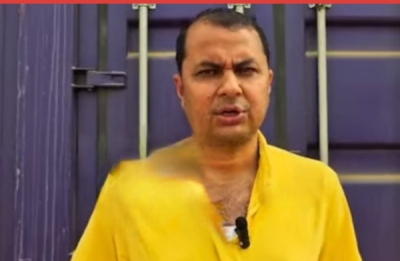
Hailing from Kamalpur in Kamrup district, Kanak Deka began his entrepreneurial path with a vision that many considered too ambitious for a young businessman. Yet, driven by persistence and a deep understanding of Assam’s growing logistics needs, he transformed that dream into a landmark project—the creation of the first private rail corridor in Northeast India. This extraordinary accomplishment places him among India’s most progressive youth entrepreneurs.
What sets this achievement apart is the scale and boldness of the initiative. Kanak Deka purchased not one, but two full-fledged trains, making him the first Assamese individual known to acquire trains for industrial operations. This move created a major sensation across India’s business community and marked a new chapter in Assam’s transportation and supply-chain capabilities. Such ownership, typically reserved for large corporations, created an unprecedented benchmark for private entrepreneurs in the region.
The private rail station and corridor developed by Deka’s company are now officially recognized in the Indian Railways network map, a rarity for a privately developed project. Built over approximately 300 bighas of land, this facility has been designed as a modern logistics hub, enabling seamless movement of goods for multiple industries. The station and corridor were constructed under the Prime Minister Gati Shakti Scheme, which promotes integrated infrastructure development across India. The project is also set to be inaugurated by Assam Chief Minister Himanta Biswa Sarma, adding to its significance as a state-level milestone.
This massive investment is expected to generate employment for an estimated 1,000 young men and women, providing a meaningful boost to the local economy. The new logistics hub has already attracted the attention of notable national and multinational companies. Brands like Tata, Mahindra, Sonalika, and Hindustan Unilever are set to benefit from the corridor’s strategic connectivity, highlighting the confidence major industries have placed in this pioneering initiative.
Financially, the project reflects bold commitment and long-term planning. With an investment of nearly ₹245 crore, and an even larger ₹500-crore agreement under Advantage Assam 2, the development of the private rail corridor demonstrates the scale at which young Assamese entrepreneurs are now shaping the region’s industrial narrative. The initiative is more than just an infrastructure project—it is a symbol of what determined regional entrepreneurship can achieve when combined with government support, modern planning, and a vision for future-ready industrial growth.
For Assam, this development is a powerful statement of possibility. The region’s geographic location, coupled with the rise of new logistics and manufacturing sectors, makes it a natural gateway for trade and transportation. Kanak Deka’s achievement shows how local entrepreneurs can leverage this potential and lead innovation on a national level.
For the youth of Assam and the Northeast, his journey stands as a motivation—showing that big dreams can be realized even in sectors traditionally dominated by large corporate houses. It is also a reminder that modern infrastructure development does not always have to come from multinational conglomerates; sometimes, it begins with the vision of a single individual willing to think beyond limitations.
In essence, Kanak Deka becoming the first Assamese to purchase trains marks a turning point in Assam’s economic landscape. His private rail corridor is more than a business venture—it is a blueprint for future development, job creation, and industrial self-reliance in the region. As the project prepares for full-scale operation, it is expected to reshape the logistics ecosystem of Northeast India, setting a new standard for innovation and entrepreneurship.