Detailed Notes
It is part of the broader cremation rituals and is followed by "Doha" on the ninth day.
Meaning of Tiloni in Assam
-
The word Tiloni comes from “tini” (three), symbolizing the third day.
-
It is a post-death ritual, performed to purify the surroundings and pray for the soul of the deceased.
Rituals of Tiloni
-
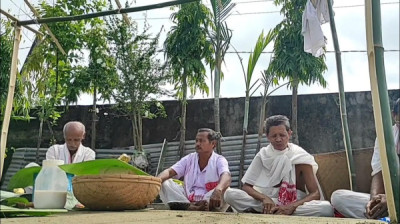
Family members and relatives gather on the third day after death.
-
A priest (or family elder) conducts rituals with offerings, prayers, and symbolic purification.
-
Clothes, beddings, and items used by the deceased may be washed or discarded as part of the ritual.
-
Food is sometimes prepared and offered in the memory of the departed.
Cultural Belief Behind Tiloni
-
It is believed that by the third day, the soul begins its spiritual journey, and Tiloni helps in ensuring peace and purity.
-
The ritual also provides a collective mourning period for the family and community.
Significance of Tiloni
-
Cleanses the house and family members after the mourning period.
-
Helps relatives and neighbors offer condolences and prayers together.
-
Maintains cultural continuity and respect for ancestors.
Conclusion
In Assamese tradition, Tiloni is an essential post-death ritual observed on the third day after a person’s passing. It symbolizes purification, prayer, and the cultural belief in guiding the soul toward peace.