Detailed Notes
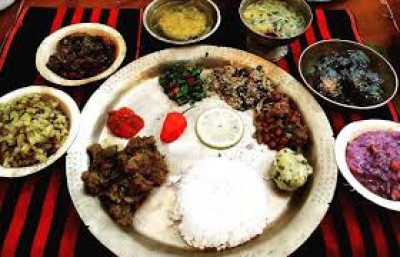
Assam boasts a variety of delicious and unique vegetarian dishes. Some must-try options include Aloo Pitika, a mashed potato dish with mustard oil and spices, and various thali options featuring dishes like Dali, Mati Mahor Dali, Bilahir Tok, and Xaak. Other popular items include Vegetable Boras (a type of pakora), Raw Banana and Poppy Seed Curry, and dishes made with mustard oil and spices.
Famous Traditional Vegetarian Foods of Assam
-
Xaak (Green Leafy Vegetables)
Assamese meals often feature a variety of xaak (wild leafy greens) such as Kothal xaak, Lai haak, and Dhekia haak. These greens are cooked simply with mustard oil, garlic, and minimal spices to retain their natural flavors and nutrients. -
Aloo Pitika
A classic Assamese mashed potato dish seasoned with mustard oil, green chilies, and onions. It’s a simple yet flavorful side dish enjoyed with rice. -
Bora Saul and Pitha
Bora saul is a special glutinous rice from Assam used to make pitha—traditional rice cakes that are often stuffed or sweetened, popular during festivals. -
Ou Tenga Bhaat (Elephant Apple Curry)
A tangy vegetarian curry made from Ou Tenga (elephant apple), providing a sour and refreshing flavor to the meal. -
Masor Khar (Vegetarian Version)
While traditionally made with fish, the vegetarian version uses raw papaya or pulses cooked in alkaline water (khar) for a healthy, flavorful dish. -
Sunga Saag
A unique preparation using bamboo shoot cooked with vegetables or greens, offering an earthy and authentic Assamese flavor. -
Pitika Variations
Besides Aloo Pitika, Assamese cuisine includes pitika made from roasted eggplant, tomato, or green peas, mixed with mustard oil and spices.
Cultural Importance
Vegetarian dishes hold significant cultural importance, especially during festivals, religious ceremonies, and among certain communities. The focus on fresh, locally sourced ingredients reflects Assam’s close connection to nature.
Assamese vegetarian cuisine is a celebration of natural flavors, simple cooking techniques, and nutritional richness, making it a vital part of Assam’s diverse food culture.