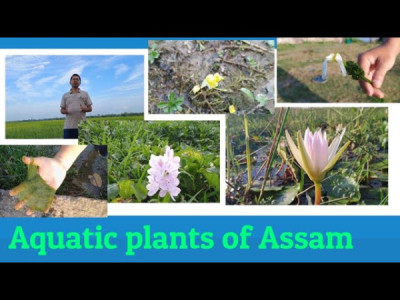
Detailed Notes
Wetlands such as Deepor Beel, Son Beel, Maguri Motapung Beel, Dhir Beel, Tamaranga Beel, Dalani Beel, Urpad Beel, Kandulijaan Beel, and Sasoni Merbil are ecologically significant. Among them, Deepor Beel in Kamrup (Metropolitan) is Assam's only Ramsar Site, declared in 2002, and serves as a vital habitat for migratory birds, aquatic plants, and fish species.
These wetlands support a wide variety of aquatic plants (hydrophytes), broadly classified into floating, submerged, emergent, and marshy or amphibious plants. Common floating plants include Water Hyacinth (Meteka), Water Lettuce (Barpuni), Azolla, Salvinia, and Duckweed (Soru Puni). Submerged species such as Vallisneria, Hydrilla, and Ceratophyllum demersum play a key role in oxygenating water bodies and maintaining aquatic balance.
Emergent plants like Typha elephantina (reed mace), Sagittaria, and Cyperus species dominate shallow wetland margins, while marshy and amphibious plants such as Ipomoea aquatica (Water Spinach), Ipomoea carnea, and Alternanthera philoxeroides (Alligator Weed) thrive in seasonal wetlands and paddy fields.
Several aquatic plants are deeply connected to Assam's food culture and farming systems. Alligator Weed (Kukurathengiya) is used as fodder and leafy vegetable, Black Taro (Kola Koch) and White Taro (Boga Koch) are iron-rich wild vegetables, while Water Spinach (Kalau Shaak) is valued for nutrition, medicinal use, and water purification. Pontederia vaginalis (Kona or Bhat Meteka) and Zizaniopsis miliacea (Suhi) are closely associated with deepwater paddy cultivation like Bau Dhan, reflecting Assam's wetland-rice heritage.
Wetlands also act as natural flood buffers, groundwater recharge zones, and water purifiers. However, many wetlands face threats from pollution, siltation, overfishing, habitat fragmentation, oil exploration, and invasive species. Protecting Assam's wetlands and their aquatic plant diversity is essential for ecological balance, food security, and cultural sustainability.
Important Aquatic Plants Found in Assam
-
Water Hyacinth (Meteka)
-
Water Lettuce (Barpuni)
-
Duckweed (Soru Puni)
-
Azolla
-
Vallisneria
-
Hydrilla
-
Ceratophyllum demersum
-
Water Lily (Bhetful)
-
Lotus (Padum)
-
Typha elephantina
-
Ipomoea aquatica (Water Spinach)
-
Alternanthera philoxeroides
-
Pontederia vaginalis
-
Zizaniopsis miliacea
-
Colocasia esculenta
Important Aquatic and Wetland Plants Used in Assam (Local Use and Significance)
Apart from commonly known hydrophytes, Assam's wetlands support several locally important aquatic and semi-aquatic plants that play a vital role in traditional food systems, livestock rearing, and ecological balance. These plants are deeply rooted in rural life and wetland-based agriculture.
Quick Info Table on Aquatic Plants in Wetlands of Assam
| Aspect | Details |
|---|---|
| Local Name of Wetlands | Beels |
| Largest Wetland | Son Beel(Sribhumi) |
| Ramsar Site | Deepor Beel |
| Major Plant Types | Floating, Submerged, Emergent |
| Key Floating Plants | Meteka, Barpuni, Azolla |
| Ecological Role | Flood control, fish habitat, water purification |
| Threats | Pollution, siltation, invasive species |
| Cultural Importance | Food, fodder, rice cultivation |