Detailed Notes
Where Was the Rare Jumping Spider Colyttus bilineatus Found in Assam?
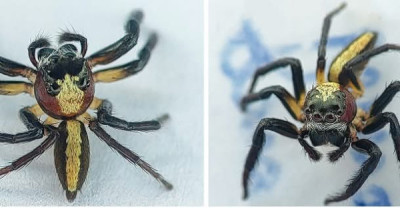
The discovery was made in Loharbond village of Cachar district, inside an Inner Line Reserved Forest, during routine fieldwork conducted by researchers from Assam University, Silchar. The research team included Monica Chetry and Parthankar Choudhury, in collaboration with renowned arachnologist John T. D. Caleb from Saveetha University, Chennai. Their findings were published in the international peer-reviewed journal Journal of Threatened Taxa.
The Barak Valley lies within the Indo-Burma biodiversity hotspot, one of the most biologically rich yet threatened ecological regions in the world. Its environment features mixed evergreen and deciduous forests, dense canopy cover, and abundant bamboo vegetation, creating ideal microhabitats for small and elusive species such as jumping spiders. Compared to heavily studied areas like the Western Ghats, Northeast India remains relatively underexplored, making this discovery especially important.
Researchers suggest that the presence of Colyttus bilineatus in Assam may indicate either a much wider natural distribution across South and Southeast Asia or major gaps in biodiversity documentation in northeastern India. The spider was collected using simple sampling techniques, highlighting the importance of sustained, ground-level ecological research conducted by regional institutions.
Despite their small size, jumping spiders play a vital ecological role as active predators, helping regulate insect populations and maintain forest ecosystem balance. This finding reinforces that Assam’s biodiversity is not only rich in large mammals and birds but also in lesser-known species that continue to emerge through scientific exploration.
Overall, the discovery of Colyttus bilineatus in Cachar district places Assam firmly on India’s arachnological research map and underscores the vast, still-unfolding biological wealth of the Barak Valley forests.