Detailed Notes
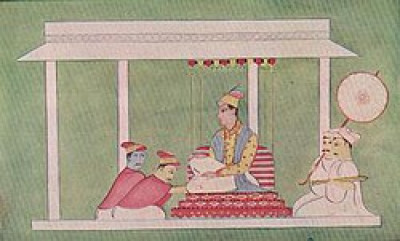
During a time when modern communication systems did not exist, the Ahom administration depended heavily on these messengers to maintain control over distant territories. The Katakis played a vital role in linking the central royal court with regional officers, military commanders, frontier administrators, and diplomatic missions. Their reliability and speed were essential to preserving law, order, and unity within the vast Ahom realm.
Katakis were often selected based on their trustworthiness, loyalty, physical endurance, and familiarity with regional routes. They traveled on foot, horseback, boats, and sometimes through dense forests and river systems to reach remote parts of Assam and neighboring territories. Because they carried sensitive state documents and verbal instructions, Katakis were considered part of the kingdom's inner administrative circle.
Beyond internal governance, Katakis also served as diplomatic messengers. They were entrusted with delivering royal letters to neighboring kingdoms, chiefs, and foreign powers. In some cases, they represented the Ahom king during negotiations and peace missions, making them early diplomatic agents of the state.
Their responsibilities included:
-
Delivering royal decrees and administrative orders
-
Carrying military instructions during times of conflict
-
Transporting diplomatic messages to allied and rival states
-
Reporting regional developments to the royal court
-
Ensuring accurate verbal transmission of confidential instructions
Because of the importance of their work, Katakis were often granted special privileges, exemptions from certain taxes, and social recognition. Their position required both intellectual ability and physical stamina, as they frequently traveled long distances under difficult conditions.
The effectiveness of the Kataki system contributed significantly to the administrative efficiency of the Ahom dynasty, which ruled Assam for nearly six centuries. Their role helped maintain centralized authority while allowing regional officials to operate in distant provinces with clear direction from the royal court.
In historical records and chronicles, Katakis are often mentioned as key intermediaries between kings and governors. Their work ensured that laws were enforced uniformly, military responses were swift, and diplomatic relations were properly managed. Without their service, governance across Assam's diverse terrain would have been far more challenging.
Today, Katakis are remembered as an essential part of Assam's medieval governance structure and as pioneers of organized communication in the region. Their contribution reflects the advanced administrative practices of the Ahom state, which relied on human networks long before modern postal and telecommunication systems were introduced.
Main Highlights
-
Special correspondence officials of Ahom era: Katakis
-
Primary function: Delivery of royal messages and orders
-
Importance: Linked central authority with regional administration
-
Other roles: Diplomacy, military communication, intelligence transmission
-
Historical significance: Strengthened governance efficiency of the Ahom kingdom