Detailed Notes
Are Gharials the Same as Crocodiles Found in the Brahmaputra River in Assam?
Understanding the difference between gharials and other crocodiles in Assam is important, especially because the gharial is one of the most critically endangered reptiles in the world and has recently been rediscovered in parts of the Brahmaputra River system.
1. Are Gharials and Crocodiles the Same?
Technically Yes
Both gharials and crocodiles belong to the scientific order Crocodylia. This makes them part of the same larger reptile group known as crocodilians. So, in a broad biological sense, gharials are a type of crocodilian.
Physically No
Despite belonging to the same order, gharials are very different from what most people imagine when they think of crocodiles.
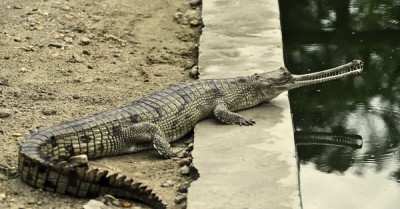
The gharial, scientifically known as Gavialis gangeticus, is easily recognized by its extremely long, thin, and narrow snout. This snout contains around 110 sharp, interlocking teeth specially designed for catching fish. In contrast, true crocodiles such as the Mugger crocodile have broader, V-shaped snouts built for catching larger prey including mammals and birds.
Because of this major physical difference, gharials and crocodiles are not the same species.
2. Types of Crocodilians Found in the Brahmaputra River System
The Brahmaputra River system in Assam hosts multiple crocodilian species. These include:
1. Gharial (Gavialis gangeticus)
The gharial is the rarest and most specialized crocodilian in the region. Historically, gharials were widespread in the Brahmaputra River. However, they were believed to have disappeared from Assam in the 1950s due to habitat destruction and hunting.
Recent developments have changed this belief. Since 2021, confirmed sightings have taken place in the Brahmaputra River near the Biswanath Wildlife Division in Kaziranga National Park and Tiger Reserve. A lone female gharial has been monitored there and has survived multiple flood seasons, proving that the river ecosystem can still support the species.
In 2022, another gharial sighting was reported in the Dibru River within Dibru-Saikhowa National Park. These discoveries suggest a fragile but hopeful revival of the species in Assam.
Gharials prefer deep, fast-flowing rivers and are highly aquatic reptiles. Unlike other crocodiles, they spend most of their time in water and rarely move far onto land.
2. Mugger Crocodile (Crocodylus palustris)
The Mugger crocodile, also known as the marsh crocodile, is more common in India. It has a broader snout and a stronger jaw adapted for a wider range of prey. Muggers are found in rivers, lakes, marshes, and reservoirs, including parts of the Brahmaputra system.
Compared to gharials, Mugger crocodiles are more adaptable and may sometimes come into conflict with humans.
3. Saltwater Crocodile (Crocodylus porosus)
The Saltwater crocodile, the largest living reptile species, may occasionally be found in estuarine regions where the Brahmaputra meets the sea. However, they are not common in the upper stretches of the river within Assam.
3. Key Differences Between Gharials and Crocodiles
Snout Shape
-
Gharial: Long, thin, narrow snout with interlocking teeth.
-
Crocodile (Mugger): Broad, V-shaped snout.
Diet
-
Gharial: Feeds almost exclusively on fish.
-
Crocodile: Eats fish, birds, mammals, and sometimes livestock.
Behavior
-
Gharial: Shy, highly aquatic, avoids humans.
-
Crocodile: More aggressive and can pose a threat to humans.
Threat Level to Humans
Gharials are rarely considered dangerous to humans because their narrow snout is not suitable for attacking large prey. Mugger crocodiles, on the other hand, can be dangerous in certain situations.
4. Habitat and Distribution in Assam
Historically, gharials were found throughout the Brahmaputra and Barak river systems. They were believed to have vanished from the Brahmaputra by the mid-20th century.
However, recent confirmed sightings indicate their presence in:
-
Brahmaputra River near Biswanath Wildlife Division
-
Kaziranga National Park and Tiger Reserve
-
Dibru River in Dibru-Saikhowa National Park
-
Eastern districts such as Lakhimpur and Sivasagar
-
Western districts including Barpeta, Goalpara, and Dhubri
The survival of a lone female gharial in Kaziranga since 2021 shows that suitable habitat conditions still exist in the river ecosystem.
5. Conservation Status of Gharials
The gharial is listed as Critically Endangered on the IUCN Red List. It is also protected under Schedule I of the Wildlife Protection Act, 1972, which provides the highest level of legal protection in India.
Despite this protection, gharials face serious threats such as:
-
River pollution
-
Sand mining
-
Dam construction
-
Fishing net entanglement
-
Habitat destruction
The absence of a stable breeding population in Assam makes their survival uncertain.
6. Conservation Efforts in Assam
Surveys conducted by the Biswanath Wildlife Division and TSA Foundation India have helped confirm the presence of gharials in Assam. These findings have renewed discussions about possible reintroduction programs to establish a breeding population in the Brahmaputra River.
The continued survival of the lone female gharial through multiple floods indicates that the Brahmaputra ecosystem may support future conservation initiatives.
Experts believe that protecting deep river channels, controlling illegal fishing, and monitoring habitats are essential for revival.
7. Ecological Significance
The presence of gharials indicates a healthy river system. Since they feed almost entirely on fish, they help maintain ecological balance within aquatic ecosystems.
Their recent sightings suggest that Assam's riverine ecosystems, particularly in Kaziranga and Dibru-Saikhowa, still retain the natural conditions required to support rare aquatic wildlife.
Conclusion
Gharials are not the same as common crocodiles found in the Brahmaputra River, although they belong to the same crocodilian order. They are a distinct, critically endangered species known for their long, narrow snouts and fish-based diet. Once thought extinct in Assam, recent sightings in Kaziranga and Dibru-Saikhowa have confirmed their continued presence. Their survival represents both a conservation challenge and a hopeful sign for the future of Assam's river ecosystems.