Detailed Notes
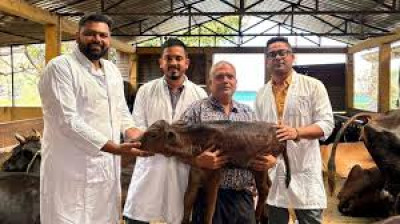
The calf, reportedly named Lakhimi, weighed 23 kg at birth and was found to be healthy and active. This successful birth marks the first time that In Vitro Fertilization (IVF) combined with Embryo Transfer Technology has been implemented effectively under field conditions in Assam, rather than in controlled laboratory environments.
This scientific achievement was led by Dr. Manjyoti Bhuyan, along with his team members Dr. Manna Baruti and Dr. Raju Deka from the College of Veterinary Science, Assam Veterinary and Fishery University, Khanapara. Their work demonstrates the growing potential of Assisted Reproductive Technologies (ART) in improving livestock productivity and genetic quality in the region.
The use of IVF and embryo transfer technology allows for the rapid multiplication of superior cattle breeds. This is expected to significantly improve milk production and overall dairy efficiency in Assam. By enabling the propagation of high-quality genetic stock, this innovation can contribute to increasing farmers' income and strengthening the rural economy.
According to experts, this breakthrough highlights the practical viability of modern breeding technologies in real-world farm conditions. It is also likely to encourage wider adoption of such scientific methods among farmers across Assam and the broader Northeast region.
The success is not limited to a single event. Researchers have indicated that more IVF-born calves, including Lakhimi and Lakhimi-Gir crossbreeds, are expected in the coming months as part of an ongoing program. These developments are anticipated to play a crucial role in breed improvement, conservation efforts, and sustainable livestock management.
Overall, the birth of Assam’s first IVF calf represents a significant step forward in the state’s dairy and livestock sector. It showcases how scientific innovation can transform traditional farming practices and create long-term benefits for farmers and the agricultural economy.