Detailed Notes
The origin of the eight khel system is closely associated with Ahom king Gadadhar Singha, formerly known as Gadapani Konwar. After ascending the Ahom throne in 1681 AD, the king entrusted the care and continuity of the sacred Athkheliya Namghar to eight distinct clans residing in the area. Over time, these clans came to be identified collectively as Athkheliya, a name derived from the Assamese understanding of eight organized groups working together for a common religious purpose.
Here are the eight khel (kuri) of Athkheliya Namghar
Bochakuri – The khel specially selected by the Ahom king to perform important royal and administrative services.
Bairagikuri – The khel responsible for acting as royal messengers and carrying communications to other regions and kingdoms.
Brahmankuri – The khel entrusted with religious duties, consisting mainly of Brahmans settled for spiritual practices.
Nangalkuri – The khel assigned agricultural responsibilities, mainly involved in cultivation and land farming activities.
Solalkuri – The khel believed to have originated from learned and knowledgeable individuals who guided the local community.
Kacharikuri – The khel formed in the name of an individual called Kachari, representing a lineage based clan.
Borahikuri – The khel constituted by members of the Borahi tribe who later adopted Vaishnavism.
Kakatikuri – The khel responsible for maintaining land records and agricultural accounts under the Ahom administration.
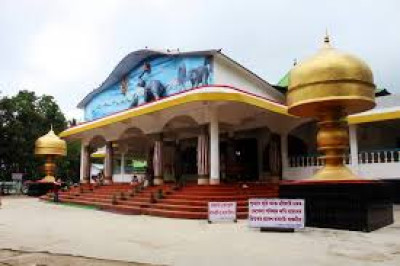
Understanding the eight khel of Athkheliya Namghar offers valuable insight into how religion, governance, and community life were harmoniously balanced in Assam. It also explains why Athkheliya Namghar is not just a place of worship, but a living institution shaped by collective devotion and organized social structure.