Detailed Notes
Historical Background of Basudev Than
The origin of Basudev Than dates back to the late 14th century. According to historical traditions, the land for the original shrine was donated in 1392 AD by Chutia king Satyanarayan of Sadia (Sadhapur). A temple dedicated to Lord Vishnu (Basudev) was constructed at that time to promote Vishnu worship in the region.
However, repeated floods caused extensive damage, leading to the abandonment of the original structure. Later, in 1401 AD, King Lakshminarayan, the son of Satyanarayan, rebuilt a part of the temple and entrusted its care to a priest named Rabidas Banasapati. Over generations, the temple remained under his lineage.
Origin of the Name Narowa Satra
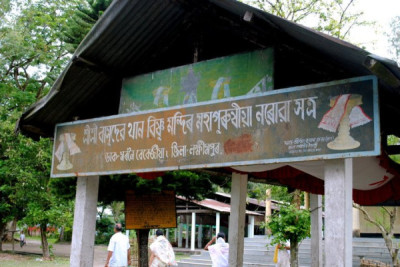
Historically, the shrine was known as Naroa or Narowa Satra, and different interpretations exist regarding its name. One tradition suggests that Damodardev Ata arrived from Ujani Assam and later established Laumuri Satra, while Narowa Satra continued as a sacred seat of Basudev worship.
During the Ahom period, the Satra gained royal attention. In 1707 AD, Ahom king Gaurinath Singha attempted to visit the shrine but was forced to return due to adverse river conditions. The river route he traveled by later came to be known as Champora, preserving this historical memory.