Detailed Notes
Magh Bihu, also known as Bhogali Bihu, is the festival of feasting and marks the end of the harvesting season. Community bonfires, gatherings, and elaborate meals are an essential part of this celebration. Bohag Bihu, or Rongali Bihu, welcomes the Assamese New Year and the arrival of spring, symbolizing new beginnings, greenery, and fresh produce. Both festivals are incomplete without a wide range of pithas, larus, fish preparations, meat dishes, and comforting vegetarian recipes.
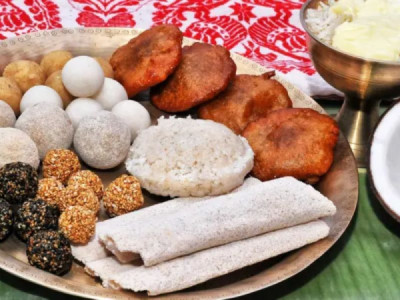
A major highlight of both Bihus is the preparation of different types of pithas made from rice flour, coconut, and sesame seeds. Traditional sweets such as til pitha, narikol pitha, sunga pitha and ghila pitha are enjoyed along with various types of larus like til laru, narikol laru and muri laru. The famous Assamese jolpan platter, consisting of chira, muri, komal saul, curd, cream and jaggery, is also an integral part of festive breakfasts.
During Magh Bihu, grand feasts are prepared on Uruka night where friends and relatives gather for community cooking. Several Assamese meat and fish dishes like duck curry with ash gourd, pigeon curry, pork with bamboo shoot, chicken curry and fish tenga are commonly cooked for this occasion. Simple comfort foods like aloo pitika, black lentil curry and roasted vegetable pitikas are equally popular.
Bohag Bihu marks the beginning of the Assamese New Year and focuses on fresh seasonal vegetables and light meals. The first day of the celebration often begins with a combination of sweet and slightly bitter flavors as a symbolic ritual. Traditional Assamese vegetarian dishes, jackfruit curry, mati dalor khar, mixed herbs stir fries and tangy fish tenga are commonly prepared during this time. Along with festive recipes, music, dance and traditional attire make Bohag Bihu culturally rich and joyful.
Key Pointers
-
Traditional Assamese food for Magh Bihu and Bohag Bihu
-
Authentic recipes made from rice, sesame, coconut and jaggery
-
Pithas and larus as main festive sweets
-
Jolpan breakfast platter with rice varieties and curd
-
Meat and fish dishes cooked during Magh Bihu feasts
-
Vegetarian and seasonal dishes prepared during Bohag Bihu
-
Importance of Uruka night meals
-
Cultural significance of Assamese Bihu food traditions