History & Traditions
The word Mohoho is derived from two root terms: Moh, meaning mosquito or harmful insect, and Ho, meaning to drive away. Together, the name symbolizes the festivals core purpose of protecting homes and farmlands from crop-destroying pests. However, Mohoho is not merely a functional ritual. It is also a joyous celebration filled with music, dance, blessings, and collective participation that strengthens social bonds and transmits cultural values from one generation to the next.

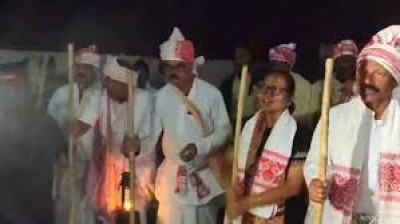
Mohoho is traditionally observed on a moonlit night when young boys, cowherds, and village youths form small groups and walk from house to house carrying bamboo torches, sticks, or bundles of dried leaves. As they move through lanes and courtyards, they sing rhythmic folk verses known as Mohoho songs, which are sung in a call-and-response style. One singer leads with a line, and the group replies in chorus, creating a lively musical pattern accompanied by the sound of sticks striking the ground. These songs are not only entertaining but also meaningful, as they contain blessings for health, prosperity, good harvests, and harmony within the household.

At each home, the group performs their songs and dance movements, after which they offer blessings to the family. In return, householders give rice, grains, vegetables, or small amounts of money. These offerings are later pooled together for a community feast, reinforcing the festivals emphasis on sharing, unity, and collective well-being. The evening often ends with villagers gathering in open spaces to eat together, exchange stories, and celebrate under the full moon.

One of the most distinctive elements of Mohoho is its symbolic ritual of driving away insects. In earlier times, villagers burned bamboo effigies or waved flaming torches while chanting traditional verses to frighten away mosquitoes and pests believed to threaten crops and health. This practice reflects the deep agricultural wisdom of rural communities, who recognized the seasonal patterns of insects and sought both spiritual and practical protection before harvesting their fields. Folk belief holds that after Mohoho, the number of harmful insects gradually decreases, signaling that the land is safe for harvesting.

Mohoho is deeply rooted in the agrarian life of Assam. The month of Aghon is a sensitive period for farmers, as paddy fields are vulnerable to pest attacks just before harvesting. By aligning the festival with the lunar cycle, communities historically created a collective response to agricultural challenges while reinforcing social cooperation. In this way, Mohoho blends ritual, ecology, and social life into a single cultural expression.
Although Mohoho is most closely associated with the Kalita community of Lower Assam, it is warmly embraced by diverse ethnic and religious groups across the region. Over time, the festival has taken on different names in different areas while retaining its essential spirit. In Goalpara, it is known as Euri or Ori Maga. In Kamrup, it is called Mahou-Hou. In Nalbari and Barpeta, people refer to it as Bhal Diya or Bhaul Diya. Among the Rava community, it is known as Bambolpita, while the Saraniya Kochari community calls it Bhaluk Nachuwa. The Hajong community observes a similar tradition known as Machmao Kheda, and some Muslim communities participate through Magan Geet. These variations highlight Mohohos inclusive character and its role as a shared cultural space for diverse communities.
The songs sung during Mohoho are collectively known as Bhal Houk Diya or Bhaul Diya songs, meaning songs of blessing and goodwill. Passed down orally over generations, these verses celebrate rural life, agricultural prosperity, seasonal rhythms, and communal harmony. Though the lyrics and tunes may differ slightly across districts, their themes remain consistent, emphasizing well-being, fertility of the land, and protection from harm. Scholars have noted similarities between Mohoho songs and other Assamese folk traditions such as Husori in Upper Assam, Eurimaga in Goalpara, and Bambol Pita songs in Baksa, suggesting a shared cultural lineage.
In modern times, cultural organizations and village councils have played a vital role in preserving and revitalizing Mohoho. In places like Tihu in Nalbari district, cultural bodies organize large-scale Mohoho events where performers visit homes, sing traditional verses, and conduct rituals under moonlight, attracting both local residents and visitors. These initiatives aim to inspire younger generations to engage with their heritage and ensure that Mohoho remains a living tradition rather than a forgotten custom.
Despite rapid urbanization and changing lifestyles, Mohoho continues to survive because of its emotional relevance and community-centered nature. The festival does not rely on expensive materials or elaborate infrastructure. Instead, it thrives on participation, shared memory, and collective joy. Its simplicity makes it accessible to all, while its symbolism gives it lasting cultural depth. In a world increasingly shaped by digital experiences, Mohoho offers a rare opportunity for face-to-face interaction, communal celebration, and connection with nature.
Beyond its agricultural and ritual dimensions, Mohoho also serves as an educational platform. Through participation, children learn folk songs, social etiquette, respect for elders, and the importance of cooperation. They gain insight into their communities farming heritage and understand how traditional knowledge shaped sustainable living practices. This informal transmission of values ensures cultural continuity and strengthens local identity.
The Mohoho Festival stands as a powerful reminder of Assams agrarian roots and the wisdom embedded in its folk traditions. It celebrates not only the harvest but also resilience, unity, and the enduring relationship between humans and their environment. By blending music, movement, ritual, and communal sharing, Mohoho transforms a simple agricultural concern into a meaningful cultural experience.
Today, Mohoho continues to light up villages across Lower Assam on moonlit Aghon nights, filling lanes and courtyards with rhythmic songs, laughter, and blessings. As communities gather to drive away insects, welcome abundance, and honor their heritage, the festival remains a vibrant symbol of Assamese rural culture and collective spirit. In preserving Mohoho, Assam preserves not just a festival, but a way of life rooted in cooperation, gratitude, and harmony with nature.