History & Traditions
Predominantly celebrated in Lower Assam, especially in districts such as Goalpara, Kamrup, Baksa, Udalguri, Kokrajhar and Bongaigaon, Baikho has gradually evolved from a forest-based ritual into a community festival that now draws participation from other ethnic groups as well.
Origin and Cultural Background of Baikho
Baikho is traditionally associated with the Rongdani and Maitori groups of the Rabha community, a Tibeto-Burman ethnic group of Assam. The Rabhas are primarily an agriculture-based community, and most of their festivals revolve around seasonal cycles, farming, and worship of nature-centric deities.
The festival is also known as Khoksi Puja, where Baikho or Khoksi is revered as the goddess of crops and wealth. Through Baikho, the Rabhas pray for protection from diseases, natural calamities, and evil forces, while also seeking peace, unity and prosperity for the entire village.
Time and Duration of Celebration
The Baikho Festival is celebrated during the Assamese months of Bohag and Jeth, which correspond to mid-April to June. Traditionally, the full moon day (Purnima) is considered the most auspicious day for the main rituals, although celebrations may begin a few days earlier or continue afterward depending on local customs.
In many villages, Baikho is celebrated for three to seven days, though in modern times, shorter versions lasting one or two days are also common.
Rituals and Ceremonial Practices
Baikho is known for its intense ritualistic structure, led by priests known as Oja, assisted by Pali. The rituals are usually performed in forests or hilly areas, symbolising closeness to nature, though staged celebrations are now common in public spaces.
Key rituals include:
Music, Dance and Community Participation
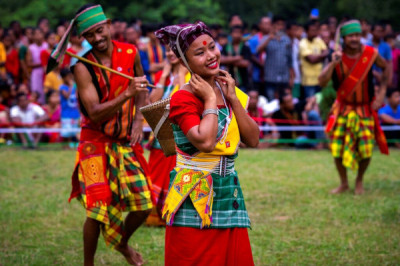
Baikho is not only religious but also deeply celebratory. Traditional drumming, singing and dancing continue throughout the festival. One of the most important songs sung during Baikho is Hoymaru, regarded as one of the longest traditional Rabha folk songs.
Community games like Lewa Tenna (tug-of-war) add excitement, while young men and women participate freely in dance and music, reinforcing social bonding. In earlier times, Baikho also served as a platform for choosing life partners, highlighting its role in social life.
Food, Rice Beer and Feasting
After rituals are completed, villagers gather for community feasts. Traditional offerings such as faksak are prepared, and rice beer is shared among participants as a symbol of unity and celebration. Women play a vital role in food preparation and ceremonial duties.
Deities Worshipped During Baikho
Multiple deities are worshipped during Baikho, depending on regional traditions. Commonly revered deities include Baikho or Khoksi, Susari, Nakkati, Tamai, Daduri, Dahari, Rongbad and Champai. Each deity has symbolic representations such as silver ornaments or ritual objects placed on the altar.
Baikho Festival and Social Change
Over time, Baikho has undergone noticeable changes due to modernisation and social transformation. While earlier celebrations were strictly ritualistic and forest-based, today many Baikho festivals are organised on stages with cultural programmes, folk dance performances, fairs and even beauty contests.
Organisations such as Rabha student unions and cultural bodies have played an important role in promoting Baikho beyond remote villages, helping preserve the tradition while adapting it for wider audiences.
Importance of Baikho in Contemporary Assam
Today, the Baikho Festival stands as a powerful symbol of Rabha identity, cultural resilience and unity. Despite changes in format, the festival continues to uphold its core values of gratitude toward nature, respect for ancestral traditions and collective wellbeing.
By blending ritual, celebration and community participation, Baikho remains one of the most meaningful indigenous festivals of Assam.
Conclusion
The Baikho Festival of Assam is more than a seasonal ritual. It is a living expression of the Rabha tribe's agricultural roots, spiritual beliefs and evolving cultural identity. As Assam continues to modernise, Baikho serves as a reminder of the deep bond between humans, land and tradition, ensuring that the voice of indigenous heritage continues to thrive across generations.