History & Traditions
Baokhungri Festival – A Sacred Hill Festival Celebrating the Spirit of the Bodo New Year
Over the years, Baokhungri Festival has grown from a traditional ritual into a major cultural and tourism event, attracting thousands of visitors from across Assam and neighboring states. Despite its expansion, the festival continues to remain deeply rooted in indigenous belief systems and age-old customs of the Bodo community.
Spiritual Significance of Baokhungri Hill
Baokhungri Hill holds immense spiritual importance for the Bodo people. The hill is revered as the sacred abode of Lord Sibrai, identified with Lord Shiva. Devotees believe that offering prayers at Baokhungri during Sankranti brings blessings, prosperity, and harmony in life.
Local folklore further enriches the spiritual aura of the hill. One popular legend speaks of Princess Deeplai, who is said to have sacrificed her life atop the hill after learning of her lover's death. According to tradition, the name Baokhungri is derived from this legend, meaning the princess who offered herself. These stories, passed down through generations, add depth and emotion to the festival experience.
The Sacred Baokhungri Hill Trek
At the heart of the Baokhungri Festival lies the ritual trek up Baokhungri Hill, performed on the eve of the Bodo New Year. Devotees begin their ascent in the early hours, viewing the climb as an act of devotion rather than a physical challenge.
A widely held belief states that individuals who complete the trek for three consecutive years on Sankranti are blessed with happiness, marital harmony, and long-lasting relationships. This belief continues to inspire young couples and families to participate year after year, making the trek both a spiritual and emotional journey.
Cultural Celebrations and Traditional Performances
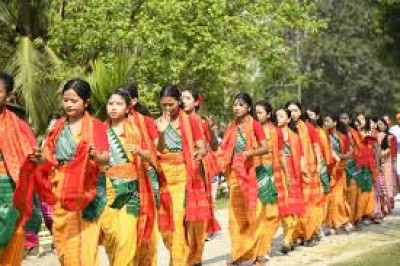
While spirituality forms the foundation of the Baokhungri Festival, cultural celebrations bring the festival grounds to life. The foothills transform into a lively arena filled with traditional Bodo music, dance, and community gatherings.
One of the most captivating performances is Bwisagu Maginai, a group dance performed by people of all ages. Dancers move rhythmically to the beats of traditional instruments such as the Kham (drum), Siphung (flute), and Jotha (cymbals), creating an atmosphere of joy and renewal.
The festival also serves as an inclusive cultural platform. Alongside Bodo traditions, communities such as Garo, Rabha, and others actively participate, presenting their own music, dance, and cuisine. This inclusiveness reflects the social harmony that defines Bodoland.
Indigenous Sports, Adventure and Modern Events
Baokhungri Festival uniquely combines tradition with adventure. Indigenous sporting events such as Khomlainai (Bodo wrestling), Ghila Gelenai, Dongfang Bukhunai, and Daobo Athing showcase physical strength and cultural pride.
In recent years, modern activities like cycling competitions, half-marathons, paragliding, and hot air balloon rides have been added, offering breathtaking aerial views of the surrounding forest landscape. These adventure elements have made the festival especially appealing to young travelers and nature enthusiasts.
Traditional Cuisine and Handicrafts
Food plays a central role in the Baokhungri Festival. Numerous stalls line the festival grounds, offering authentic Bodo delicacies prepared using traditional methods. One of the most anticipated dishes is Gwkha Gwkhwi, enriched with medicinal herbs and believed to improve immunity and help the body adapt to seasonal changes.
Handloom and handicraft exhibitions allow visitors to explore Bodoland's artistic heritage. Locally made textiles, bamboo crafts, and indigenous artifacts reflect the creativity and skill of the region's artisans.
Natural and Mythological Attractions Around Baokhungri
Baokhungri Hill lies within the Chakrashila Wildlife Sanctuary, known for its rich biodiversity and scenic beauty. Visitors may spot rare species such as the Golden Langur, along with diverse flora and birdlife.
The area is also dotted with mythological landmarks, including Mwsa Dondor, believed to be a tiger spirit's cave, Baunashad Dera, associated with mystical beings, Shikhri Shikhla Dwisa, a sacred perennial stream, and Boloram Dabri, a plateau linked to oral legends involving Lord Krishna's brother. Nearby Amjhora, with its clear spring and rocky terrain, serves as a peaceful resting spot for trekkers.
Organization and Accessibility
The Baokhungri Festival is organized by the Tourism Department and Sports and Youth Welfare Department of the BTR Government. The festival site at Harinaguri is located approximately 10 km from Kokrajhar town and about 70 km from Rupsi Airport, making it accessible for both domestic and regional travelers.
Conclusion
The Baokhungri Festival is more than a celebration. It is a living expression of faith, folklore, and cultural resilience. From the sacred hill trek and spiritual rituals to vibrant dances, traditional sports, and adventurous experiences, the festival offers a rare opportunity to witness the soul of Bodoland. For visitors seeking authenticity, nature, and cultural depth, Baokhungri Festival stands as one of Assam's most enriching experiences.