Detailed Narrative
Tai Khamyang Villages in Assam: Complete List, Culture, History and Traditions
The Tai Khamyang people are descendants of Tai groups who migrated into Assam around the 13th century, following early Tai movements led by Prince Sukaphaa. While several Tai groups entered Assam during this period, including Tai Ahom, Tai Phake, Tai Aiton, Tai Turung, and Tai Khamti, the Tai Khamyangs developed their own distinct identity. Today, they are widely known as Shyams, a name believed to have originated either from the word Shan or from Siam, the old name of Thailand.
These villages attract researchers, tourists, and Buddhist scholars from countries such as Myanmar, Japan, and Thailand, due to their preserved traditions, monasteries, and Tai-Pali manuscripts. Visitors experience Assam's cultural diversity in its most authentic form through the lifestyle, festivals, architecture, and spiritual practices of the Tai Khamyang people.
Complete List of Tai Khamyang Villages in Assam
The Tai Khamyang population in Assam is concentrated mainly in rural Buddhist settlements known as Shyam Gaons. Although their total number is small, these villages are culturally rich and historically significant.
Jorhat District (Near Titabor)
-
Na Shyam Gaon
-
Balijan Shyam Gaon
-
Betbari Shyam Gaon (also called Betoni)
These three villages lie about 30 km from Jorhat town and form the most prominent Tai Khamyang cluster. They are home to monasteries, Buddhist shrines, and traditional stilt houses and frequently host Buddhist scholars and researchers.
Sivasagar District
-
Disangpani Shyam Gaon
-
Chalapathar Shyam Gaon
-
Rahan Shyam Gaon (near Sapekhati)
-
Moniting Gaon
-
Bongaon Gaon
These villages are located about one to two hours from Sivasagar town and continue the same Buddhist traditions, community life, and cultural practices.
Golaghat District
-
Rajapukhuri Shyam Gaon
-
Rajmai Shyam Gaon (near Sarupathar)
These settlements maintain Theravada Buddhist institutions and are among the oldest Tai Khamyang villages in Assam.
Tinsukia District
Powaimukh Shyam Gaon (near Margherita)
Powaimukh village is especially significant as it is the main center of the Khamyang language, which is now considered critically endangered. The village lies about 7 miles downstream of Margherita.
In addition to Assam, a few Tai Khamyang villages also exist in Arunachal Pradesh, particularly in Lohit and Changlang districts, often alongside Tai Khamti communities. Many Tai Khamyangs have also migrated for education and employment to urban areas such as Titabor, Jorhat, Sonari, Dibrugarh, and Guwahati.
Religion and Spiritual Life
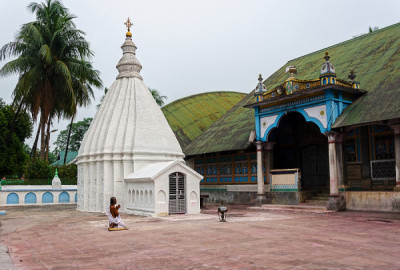
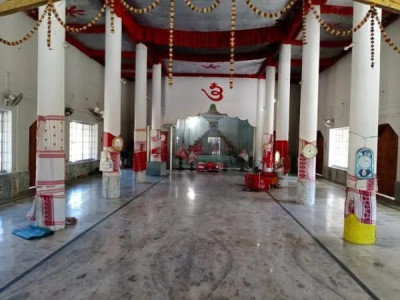
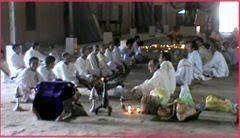
The Tai Khamyangs follow Theravada Buddhism, the oldest surviving school of Buddhism. Their villages are recognized by the presence of viharas (monasteries) and pagodas, where monks teach Tai and Pali scriptures. Ancient manuscripts written in the Tai language are still preserved inside these temples and are used during rituals and religious ceremonies.
Historically, Tai religious life showed influence from early Tai belief systems and Mahayana Buddhism, but over time, particularly after contact with Burma, the community adopted Theravada Buddhism, which continues to guide their social, moral, and spiritual practices today.
Religion is deeply integrated into daily life, influencing festivals, marriage customs, family traditions, and even architectural planning of houses and villages.
Architecture and Housing Style
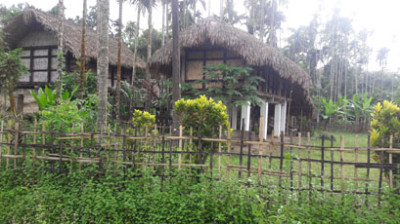
Traditional Tai Khamyang houses are known as chang ghors, or stilt houses. These houses are built facing south and raised above the ground to protect against floods, wild animals, and moisture. Below the raised platform, families dry rice grains, keep weaving looms, and store household items. In front of the house stands a chang bhoraal, or granary, used for storing food grains.
Although many families have shifted to ground-level houses in modern times, kitchens often remain elevated in keeping with tradition. Houses are surrounded by gardens and farmland, reflecting the community's Buddhist belief in peaceful coexistence with nature.
Spiritual customs also influence construction. Before building a house, families meditate on household deities known as phi-hon, and rituals are performed to protect the home from negative forces.
Language and Identity
The Tai Khamyang people speak the Khamyang language, a critically endangered Tai language closely related to Aiton, Phake, Khamti, and Turung. Today, it is spoken mainly in Powaimukh village, while Assamese and English are used more widely in education and daily communication.
Despite linguistic challenges, the Tai Khamyangs have preserved their identity through religious education, community festivals, and monastery-based learning centers, where Tai and Pali scripts continue to be taught.
Marriage Customs and Social Structure
Tai Khamyang society is patriarchal, but women enjoy equal social respect and participate fully in religious, cultural, and household decision-making. Marriage between people of the same clan is strictly prohibited.
There are three traditional forms of marriage:
-
Pan-lung, an elaborate and costly royal-style wedding that is no longer practiced.
-
Pan-on, the most common civil marriage, arranged with family approval through village elders.
-
Chaoli, a simpler and affordable form of marriage.
There is also the tradition of Gandharva marriage, where couples elope and later receive community acceptance through rituals and feasts.
Marriages are not conducted during the months of Bhadro, Kaati, Punh, Sout, or during the rainy season. All wedding feasts traditionally serve non-vegetarian food.
Birth and Death Rituals
At birth, rituals are performed to instill courage and spiritual protection in the newborn. Elders speak blessings into hollow bamboo poles, prayers are offered to the deity Lengdon, and purification ceremonies are conducted using medicinal water, leaves, soil, and sacred objects. Boys touch bows and arrows, while girls touch weaving tools, symbolizing future skills, though this practice is gradually fading.
Funeral customs differ based on age and cause of death. Those who die naturally in old age are cremated with honor, while unmarried individuals or those who die prematurely are buried. Funeral rites are completed within seven days, and bodies of those who die outside the home are traditionally not brought inside the village, though practices have become more flexible in modern times.
Festivals and Community Life
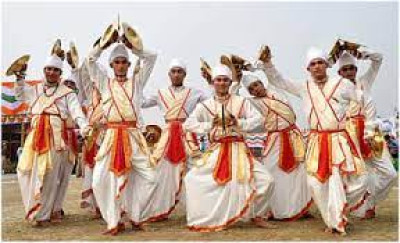
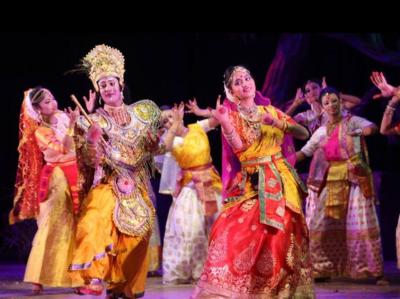
Tai Khamyang villages are known for strong community bonds and collective living. Neighbors help one another in farming, house construction, illness, and ceremonies. Social harmony and cooperation are core values passed down through generations.
Their most important festival is Poi-Sangken, the Buddhist water festival observed during Sankranti, when Buddha statues are ceremonially bathed for purification. During this time, villagers refrain from meat consumption, travel, digging soil, and flower plucking, focusing solely on prayer and ritual.
Another significant festival is Maikung-Sungphai, observed on Magh Purnima, marked by bonfires in remembrance of Buddha's announcement of his impending death. Other religious observances follow lunar calendars and commemorate Buddha's birth, enlightenment, return to his kingdom, and passing away.
Role of Women in Tai Khamyang Society
Although patriarchal in structure, Tai Khamyang society grants women equal social, religious, and economic status. Women are skilled weavers and use special waist looms to create traditional garments such as pha-lung, pha-loy, chin, chyu, pha-mai, and pha-chaet. Their textiles are famous for intricate floral patterns.
Women participate equally in farming, household decision-making, religious ceremonies, and community gatherings. There is no practice of veiling, and women enjoy freedom of movement and expression. Elder women hold authority equal to men in family and village matters.
Migration, Education, and Cultural Preservation
Unlike the Tai Ahoms, the Tai Khamyangs have retained much of their original culture and identity. However, this limited assimilation also resulted in reduced access to infrastructure and employment opportunities.
Education is viewed as the primary path to social mobility. The literacy rate among Tai Khamyangs is approximately 90 percent, though employment opportunities remain limited. To preserve spiritual and cultural traditions, the community has established Pali schools and monastery-based education systems, alongside modern schooling.
Annual festivals and religious gatherings bring together Tai communities from Assam and Arunachal Pradesh, reinforcing shared identity and cultural memory. Despite migration to towns and cities for work, the Tai Khamyangs continue to maintain strong emotional ties to their ancestral villages.
Summary: Why Tai Khamyang Villages Matter
The Tai Khamyang villages of Assam represent a rare and living example of ancient Tai Buddhist civilization in India. Known for their Shyam Gaon settlements, Theravada monasteries, chang ghor houses, Tai language heritage, and strong community values, these villages preserve traditions that date back over 700 years.
From Jorhat to Tinsukia, Golaghat to Sivasagar, these villages stand as cultural heritage centers, spiritual hubs, and living museums of Northeast India's Buddhist legacy. For travelers, researchers, and cultural enthusiasts, visiting Tai Khamyang villages offers a deep and authentic insight into Assam's diverse ethnic and spiritual landscape.