Introduction: The Spirit of Rural Sports in Assam
The villages of Assam are not only known for their lush fields and vibrant festivals but also for their deeply rooted traditional sports. These rural games are closely linked with agriculture, seasonal harvests, and especially the Bihu festivals.
More than recreation, traditional sports in Assam build physical strength, encourage teamwork, preserve folklore, and strengthen community bonds. From energetic field games to thrilling animal contests and water competitions, rural Assam celebrates sports as a way of life.
Traditional Sports During Bihu Festivals
Bihu, the most celebrated festival of Assam, marks the agricultural cycle and Assamese New Year. Sports competitions are a central attraction during Rongali Bihu and Magh Bihu.
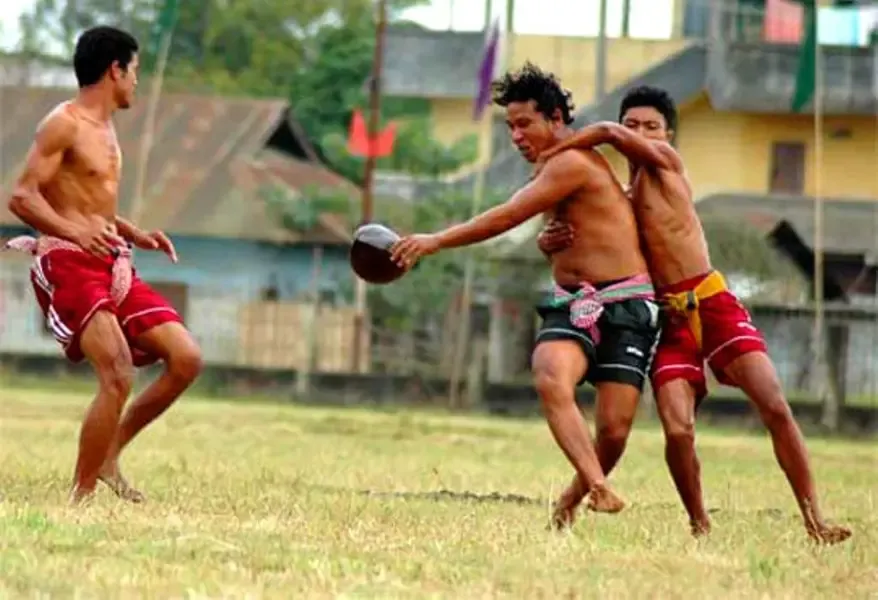
1. Dhop Khel
Dhop Khel is one of the most popular traditional Bihu games. Played between two teams, often with around eleven players each, participants throw a cloth ball called dhop at opponents while avoiding being hit. The game demands speed, agility, strategy, and stamina.
This sport has been played since the Ahom era, when royals watched such competitions from historic structures like Rang Ghar.
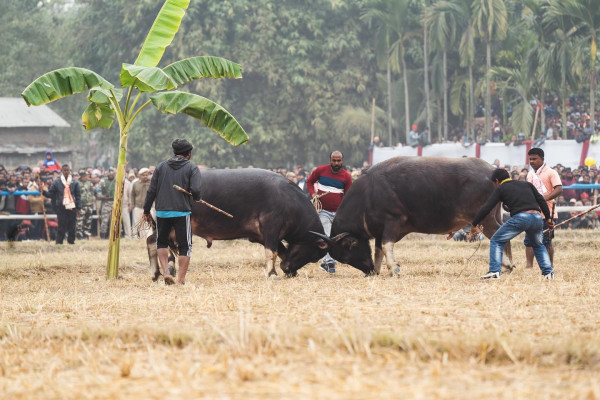
2. Moh Juj (Buffalo Fight)
Held mainly during Magh Bihu in places like Ahatguri and Baidyabori in Morigaon district, Moh Juj is a traditional buffalo contest. Two trained buffalo bulls compete in a controlled arena until one withdraws.
It is a dramatic and symbolic display of strength and pride, drawing large rural gatherings.
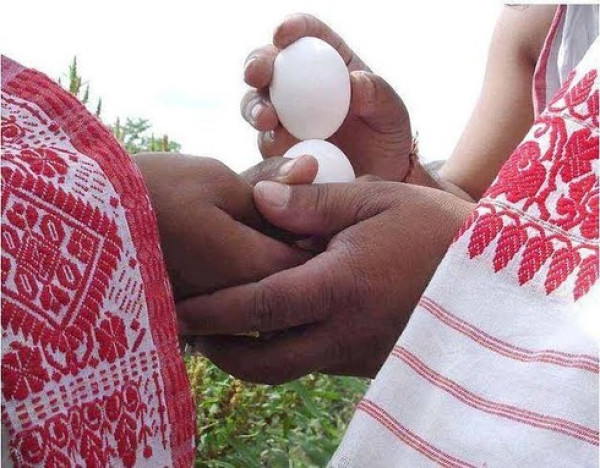
3. Koni Juj (Egg Fight)
A lighter but equally engaging Bihu activity, Koni Juj involves striking boiled eggs against each other. The participant whose egg remains unbroken wins. Though simple, it is highly competitive and fun.
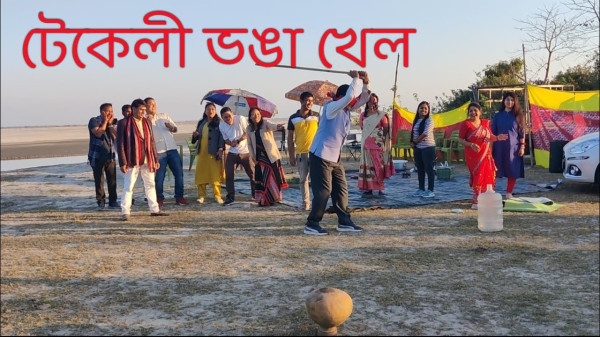
4. Tekeli Bhonga (Pot Breaking)
In this festive game, a blindfolded participant attempts to break a hanging earthen pot with a stick while guided by crowd instructions. It tests balance, listening skills, and coordination.
Team-Based Rural Sports
Hoi Gudu / Kopoti Khel
Similar to Kabaddi, Hoi Gudu is widely played by farmers after harvest. Two teams stand on opposite sides of a marked line in a field. A player crosses into the opponent's side shouting hai gudu gudu in one breath while trying to touch members and return safely.
If caught before losing breath, he is eliminated. If he returns successfully, the touched players are out. The game requires lung capacity, strategy, and teamwork.
Rashi Tana (Tug of War)
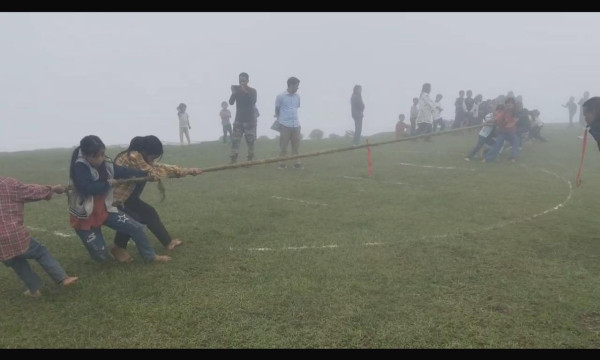
A test of collective strength, tug of war is commonly played during fairs and village gatherings. It promotes unity and coordination.
Raja Rani Khel
In this strategic team game, one player acts as king holding a post while teammates defend him. The opposing team surrounds and tries to capture or tag players. It combines imagination with physical action.
Kochu Guti Khel
Two teams search for a small wooden piece called Kochu Tepu thrown into a field. The team that finds it must place it into a designated hole while opponents try to stop them. Speed and teamwork determine the winner.
Water and River Sports
Blessed with rivers like the Brahmaputra and Subansiri, Assam naturally developed water-based sports.
Nao Khel (Boat Race)
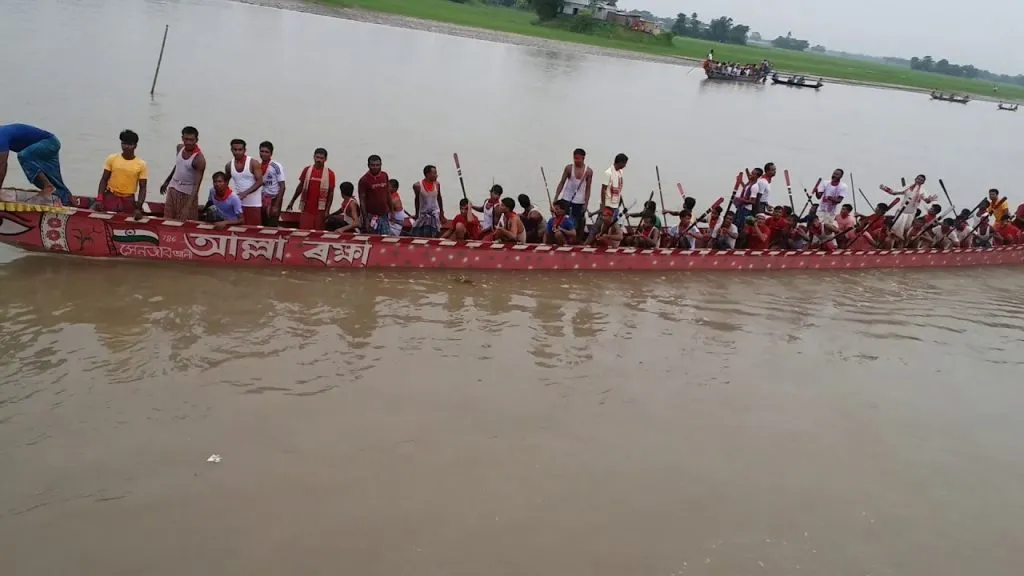
Traditional boat races are held on rivers and wetlands, especially in Majuli. Long boats known as Sangams compete in high-energy races that symbolize unity and rhythm.
Doob Khel
Played in ponds, children create a circle and take turns diving underwater to tag others. It functions like a swimming competition and builds endurance.
Children's Folk Games
Traditional village childhood is incomplete without these games:
Luka Vaku (Hide and Seek)
One child is blindfolded with a gamusa while others hide within a fixed area. After calling out Hol ne nou maniki mou, the game begins. It builds alertness and fun rivalry.
Muthi Khel (Game of Fist)
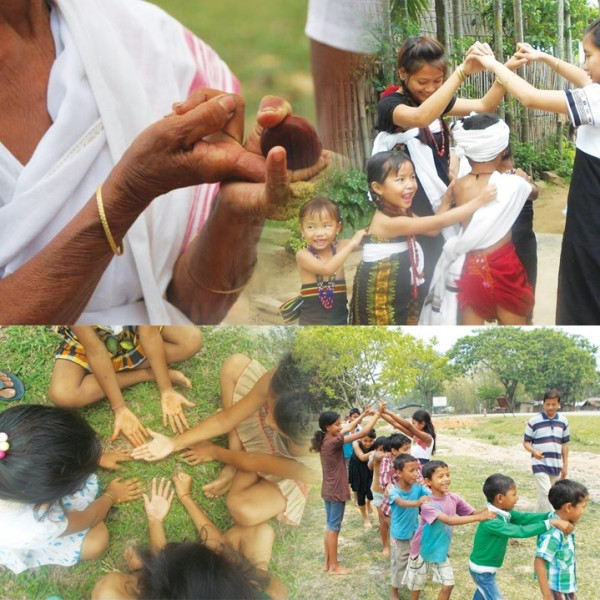
A small stone is hidden in one fist, and the opponent guesses its location while singing a rhyme. It encourages memory and observation skills.
Khuti Khel (Post Game)
Posts are placed in the ground equal to the number of players minus one. One player sings a traditional rhyme while others move between posts. If caught away from a post, the player is eliminated.
Ghila Khel
An ancient hopping game similar to hopscotch, players toss a small stone into drawn boxes and hop on one leg to retrieve it without touching lines. It tests balance and focus.
Dora Koina Khel (Bride and Groom Game)
Children recreate wedding ceremonies using household cloth as costumes, singing Biya Naam and imitating elders. This imaginative game reflects how deeply cultural rituals influence daily life.
Martial and Skill-Based Traditional Sports
During the Ahom rule, physical training and combat games were highly respected.
-
Tarual Khel (Fencing)
-
Kaar Khel (Archery)
-
Dor (Running)
-
Hatur (Swimming)
-
Hoi Kobadi (Kabaddi style game)
Many villages still maintain informal archery clubs and organize competitions during festivals.
Folk Culture Connection
Traditional sports are inseparable from Assamese culture. During Bihu, people wear Mekhela Chador, exchange Gamocha, and celebrate with dance forms like Jhumur. These games are part of the larger rural identity shaped by agriculture, weaving, and community life.
Social and Cultural Significance
Traditional rural sports of Assam play a vital role in society:
Cultural Preservation
They keep folklore, songs, and ancestral practices alive.
Physical and Mental Fitness
Most games demand stamina, coordination, and strategy.
Social Bonding
Villagers gather, cheer, and participate together, strengthening relationships.
Recreation and Joy
They offer affordable entertainment for all age groups.
The Challenge of Modernization
With modernization and digital lifestyles, many traditional games are fading. Lack of awareness among younger generations threatens their survival.
Preserving these sports can revive the ancient spirit of teamwork and rural vitality.
Conclusion
Traditional rural sports of Assam are more than games. They are reflections of agricultural life, seasonal celebration, physical endurance, and cultural pride.
From Dhop Khel fields to boat races on the Brahmaputra, these engaging village sports continue to define Assamese identity. Protecting them ensures that future generations experience the same excitement, unity, and heritage that shaped rural Assam for centuries.