Jonbeel Mela 2026: Assam's Ancient Barter Fair Celebrating Unity of Hills and Plains
Introduction: Where Tradition Still Defines Trade
In an age dominated by digital payments and global marketplaces, there is a remarkable festival in Assam where trade still happens without money. Held annually in Morigaon district, Jonbeel Mela is a centuries-old fair that preserves one of the world's oldest economic systems - the barter system.
Organized during Magh Bihu in mid-January, this three-day festival brings together hill and plains communities in a rare celebration of trust, cooperation, and cultural harmony. More than just a fair, Jonbeel Mela is a living symbol of Assam's indigenous heritage.
What is Jonbeel Mela?
Jonbeel Mela is a traditional community fair held near the crescent-shaped wetland known as Jonbeel, close to Jagiroad in Morigaon district, Assam.
The word "Jon" means Moon and "Beel" means wetland in Assamese. The fair derives its name from this moon-shaped lake where the event takes place.
Dating back to the 15th–16th century, the mela was encouraged during the reign of the Ahom kingdom to strengthen diplomatic and economic ties between hill tribes and plains communities. Today, it remains one of India's few surviving barter trade fairs.
Historical Background and Royal Legacy
Jonbeel Mela originated as a platform for peaceful economic exchange between tribal and non-tribal communities. The Ahom rulers institutionalized the fair, ensuring security and promoting inter-community cooperation.
A major highlight of the mela is the traditional Rajdarbar or royal assembly, presided over by the Gobha Raja, the Tiwa king. This assembly continues an age-old governance system where:
-
Community issues are discussed
-
Traditional tributes are collected
-
Social harmony is reaffirmed
This practice has survived medieval rule, colonial disruption, and modern governance, making the festival historically extraordinary.
The Barter System: Trade Without Money
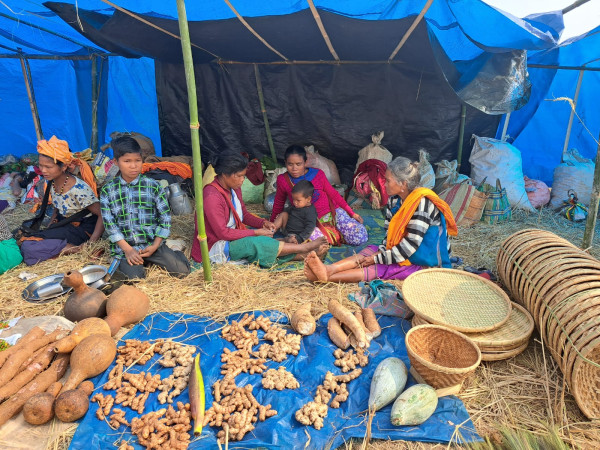
The defining feature of Jonbeel Mela is its functioning barter system. No currency is used. Goods are exchanged directly based on mutual needs and trust.
Items Brought by Hill Tribes:
-
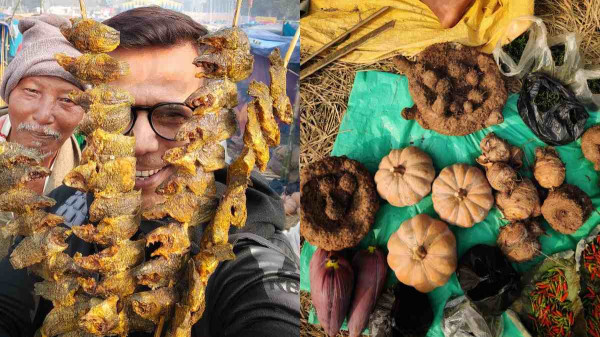
Ginger, turmeric, wild potatoes, squash
-
Medicinal herbs and forest produce
-
Honey and indigenous fermented drinks
-
Bamboo products such as baskets (pasi), jakoi, khaloi, bisoni
-
Handwoven textiles and traditional attire
Items Brought by Plains Communities:
-
Sticky rice and other rice varieties
-
Fresh and dried fish
-
Salt and spices
-
Pitha, chira, jaggery
-
Metal utensils and agricultural tools
-
Duck, pork, chicken, mutton, crabs
Communities such as Tiwa, Karbi, Khasi, Jaintia, Garo, Bodo, Ahom, Rabha, Deori and Kochari participate in this exchange. The barter reflects economic interdependence and strengthens bonds between the hills and plains.
In today's monetary economy, Jonbeel Mela stands as a rare example of sustainable, cashless trade rooted in cooperation rather than profit.
Rituals and Ceremonies
Jonbeel Mela is not only about trade; it is deeply spiritual and cultural.
Agni Puja
Before trading begins, a sacred fire ritual is performed to pray for prosperity, good harvest, and community well-being.
Flag Hoisting Ceremony
The Gobha Raja formally inaugurates the mela by hoisting the ceremonial flag.
Community Fishing
At the command of the Tiwa king, fishermen enter Jonbeel Lake for a community fishing event. A portion of the catch is offered to the king as a mark of respect before a grand feast follows.
Rajdarbar
The traditional royal court session continues centuries-old governance customs and tribute collection.
Community Feast (Jalpan)
Participants share traditional Assamese breakfast items such as:
-
Pitha
-
Chira and curd
-
Black jaggery
-
Smoked meat and bamboo shoot dishes
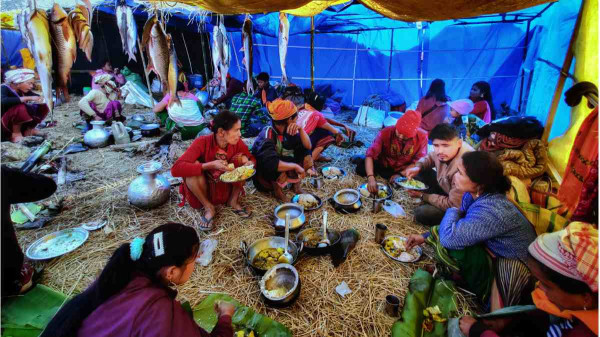
This communal dining reinforces social unity.
Cultural Performances and Tribal Expressions
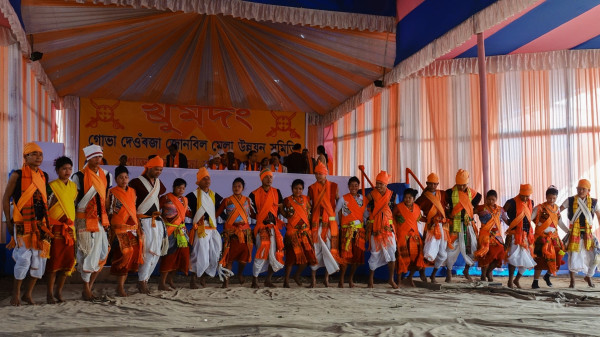
As night falls, the fair transforms into a cultural celebration featuring:
-
Tiwa warrior dances
-
Bihu dance performances
-
Deodhani dance
-
Ojapali storytelling
-
Indigenous folk music
Tribes gather in temporary bamboo huts, cooking together, singing, and celebrating through the night. The event becomes a space where historical differences dissolve in shared celebration.
Ecological and Cultural Importance
Jonbeel is a seasonal wetland that supports agriculture, fishing, and biodiversity. The fair promotes eco-friendly practices with goods wrapped in banana leaves and bamboo packaging.
The mela demonstrates:
-
Sustainable economic exchange
-
Preservation of indigenous identity
-
Harmony between diverse ethnic groups
-
Living traditional governance
It is not merely a festival, but a functioning cultural ecosystem.
When and Where is Jonbeel Mela Held?
Why Jonbeel Mela Matters Today
In a world shaped by rapid modernization, Jonbeel Mela reminds us that community, trust, and sustainability can form the foundation of economic life.
It is:
-
A living museum of Assam's tribal heritage
-
A rare operational barter system
-
A platform for unity between hills and plains
-
A model of eco-conscious trade
For anyone seeking the authentic spirit of Assamese culture, Jonbeel Mela offers an experience rooted in history, humanity, and harmony.