Jadav Payeng - The Forest Man of India Who Grew a Forest from a Barren Land
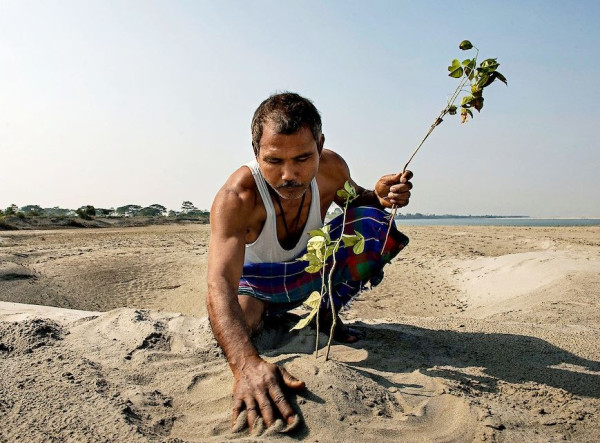
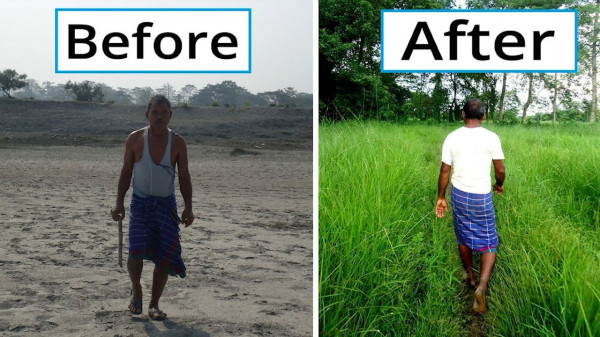
In 1979, a 16 year old boy stood on a lifeless sandbar on Majuli island in Assam, surrounded by dead snakes scorched under the harsh sun. The devastating floods of the Brahmaputra River had washed away vegetation, leaving the land dry, exposed, and uninhabitable. That young boy made a quiet promise that would change the environmental history of India.
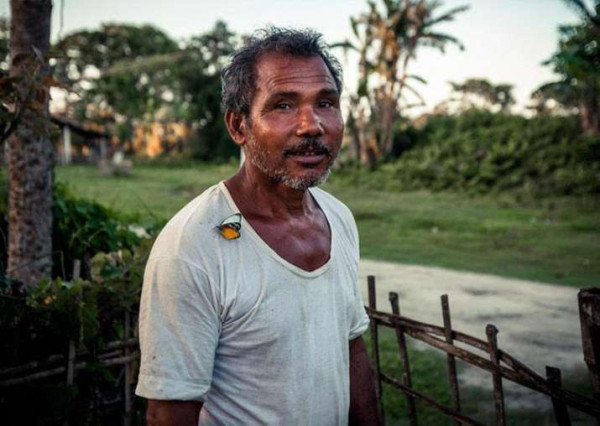
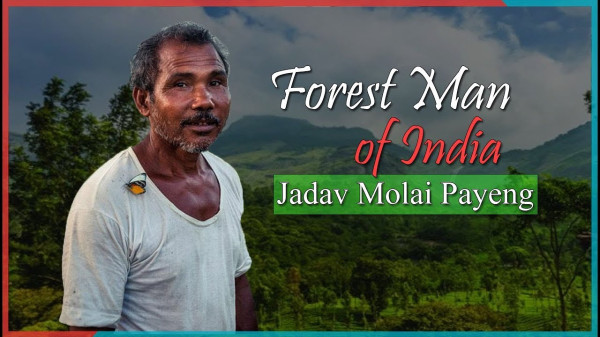
His name was Jadav 'Molai' Payeng.
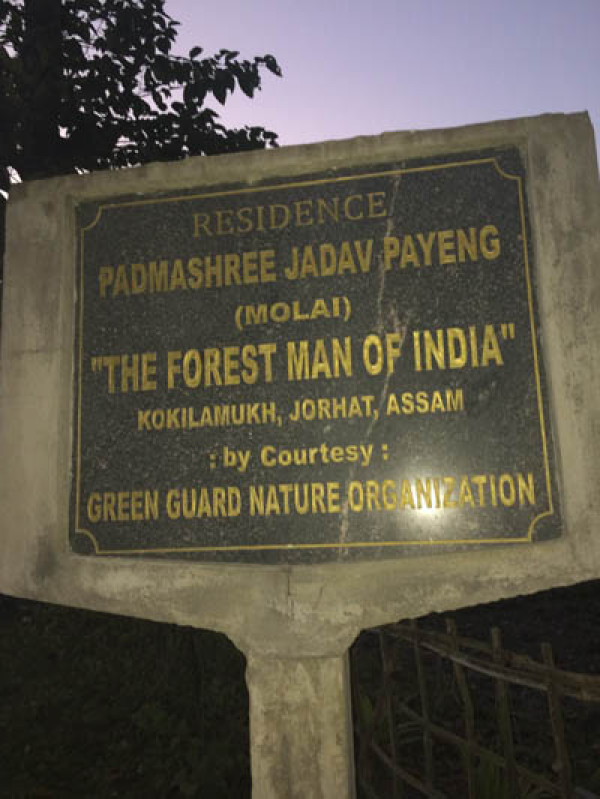
Today, he is known across the world as the Forest Man of India.
Early Life and Turning Point
Jadav Payeng was born on 31 October 1959 in Assam and belongs to the indigenous Mising tribe. He grew up close to nature, understanding the rhythms of rivers, forests, and wildlife from a young age.
When floods devastated the region in 1979, they left behind a barren sandbar near Kokilamukh in Jorhat district. The absence of trees caused extreme heat and soil erosion. Payeng witnessed snakes dying due to lack of shade and moisture. Deeply moved, he decided to act.
The forest department suggested planting bamboo. Instead of waiting for help, he began planting trees himself.
He did not seek permission. He did not seek recognition. He simply began.
The Beginning of the Molai Forest
At just 16 years old, Payeng planted around 20 bamboo seedlings on the sandbar. What started as a small effort slowly became a lifelong mission.
For decades, he planted and nurtured saplings every single day. He worked alone in extreme heat and isolation, crossing the river daily to care for the plants.
To solve the problem of watering saplings in such a vast area, he created an innovative system. He built bamboo platforms and placed earthen pots with small holes above young plants. Water would slowly drip down, ensuring consistent moisture.
Gradually, bamboo expanded across hundreds of hectares. He added native species including:
-
Valcol
-
Arjun (Terminalia arjuna)
-
Ejar (Lagerstroemia speciosa)
-
Goldmohur (Delonix regia)
-
Koroi (Albizia procera)
-
Moj (Archidendron bigeminum)
-
Himolu (Bombax ceiba)
Over time, the once barren sandbar transformed into a thriving forest.
This forest is now known as the Molai Forest, named after his nickname.
It spans approximately 1,360 acres, an area larger than New York's Central Park.
A Thriving Wildlife Habitat
What began as a personal effort evolved into a biodiversity hotspot.
Today, the Molai Forest is home to:
-
Bengal tigers
-
Indian rhinoceroses
-
Over 100 deer and rabbits
-
Monkeys
-
Thousands of birds including vultures
-
A herd of around 100 elephants
The elephants visit annually and often stay for nearly six months. In recent years, they have given birth to multiple calves inside the forest.
The forest also acts as a natural barrier against soil erosion and flooding along the Brahmaputra River, helping stabilize the ecosystem of the region.
Recognition After Decades of Silence
For nearly 30 years, Payeng's work remained unnoticed.
In 2008, forest department officials entered the area while tracking 115 elephants that had damaged property in a nearby village. They were astonished to find a dense, flourishing forest where once there had been nothing.
In 2012, he was honoured at Jawaharlal Nehru University's School of Environmental Sciences, where he was given the title Forest Man of India.
In 2015, he received the Padma Shri, India's fourth highest civilian award, from President Pranab Mukherjee.
He has also received honorary doctorate degrees from Assam Agricultural University and Kaziranga University.
Personal Life and Daily Dedication
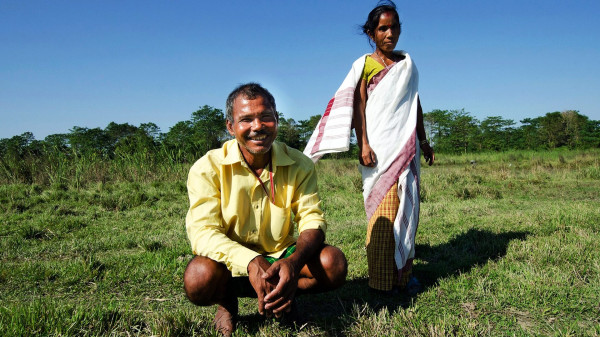
Payeng lives a simple life. He previously lived inside the forest with his wife and three children before shifting to a nearby village home in 2012.
Despite recognition and awards, he travels daily to the forest to continue planting and maintaining trees.
He sustains his livelihood by selling milk from cattle and buffalo he raises. Wildlife, particularly tigers, have killed many of his animals over the years, yet he does not blame the forest. Instead, he highlights deforestation and human encroachment as the root cause of wildlife conflict.
He continues to say, "I will plant trees till my last breath."
Cultural Impact and Documentaries
Jadav Payeng's inspiring journey has been documented in several films and books.
Notable documentaries include:
-
The Molai Forest by Jitu Kalita
-
Foresting Life directed by Aarti Shrivastava
-
Forest Man by William Douglas McMaster
The film Forest Man won Best Documentary at the Emerging Filmmaker Showcase at the 2014 Cannes Film Festival.
His life inspired fictional adaptations including the film Haathi Mere Saathi.
He is also the subject of children's books such as:
-
Jadav and the Tree-Place by Vinayak Varma
-
The Boy Who Grew A Forest by Sophia Gholz
His story continues to inspire environmental movements globally.
Why Jadav Payeng's Story Matters
Jadav Payeng's journey proves that one individual can restore ecological balance.
He did not wait for policies, funding, or institutions. He planted one tree at a time. Over four decades, that consistency created a carbon sink, revived biodiversity, and protected land from erosion.
In an era of climate change, deforestation, and global warming, his life offers a powerful lesson:
Small daily actions create an extraordinary impact.
Conclusion - A Living Legacy
Jadav Payeng is not just an environmentalist. He is a symbol of resilience, responsibility, and hope.
The Molai Forest stands today as a living example of what dedication can achieve. From a barren sandbar to a thriving ecosystem, his work demonstrates that nature responds when nurtured.
If one man can grow a forest, each of us can plant a tree.
The future of our planet begins with a single step.