Introduction: Holi with a Distinct Assamese Identity
While Holi is celebrated across India as the festival of colors, in Assam it takes on a unique spiritual and cultural form known as Doul Utsav or Deul. Deeply rooted in Vaishnavite traditions, Doul Utsav is not just about playing with colors but about devotion, music, rituals and community bonding.
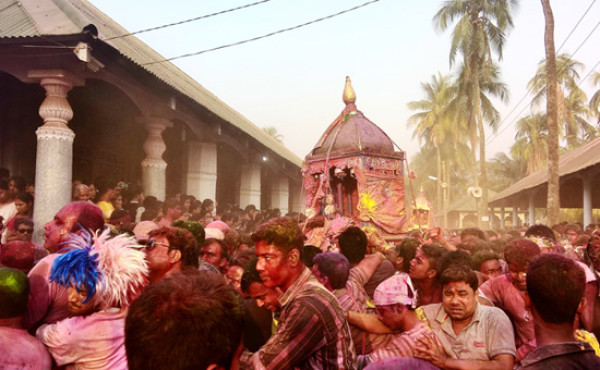
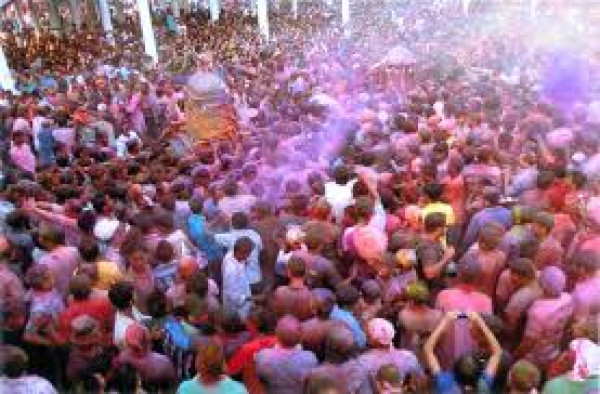
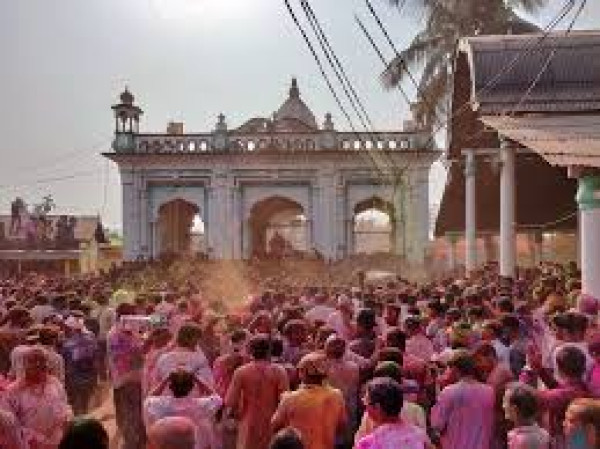
The most iconic celebration takes place at Barpeta Satra, often called the Vrindavan of the East and also known as Ditiya Vaikuntha Puri, meaning the second heaven. Here, Holi transforms into a grand spiritual and cultural festival that attracts devotees and tourists from across Assam, India and beyond.
Historical Origin of Doul Utsav in Assam
The roots of Doul Utsav go back to the Vaishnavite reform movement led by Mahapurush Srimanta Sankardev in the 15th century. He celebrated Doul at Bordowa in Nagaon and composed devotional Holi songs.
At Barpeta, Mathura Das Burha Ata first organized the grand Doul Utsav based on the concept of Vaikuntha or heaven. He coordinated elaborate rituals and performances that continue in satriya tradition even today.
The festival primarily commemorates the divine love and playful acts of Lord Krishna and Radha. It also recalls the story of Krishna's visit to his beloved Ghunusa, which forms the dramatic core of the Barpeta Doul celebration.
Why is Doul Utsav Celebrated?
Doul Utsav symbolizes:
-
Eternal love of Radha and Krishna
-
Victory of good over evil
-
Arrival of spring after winter
-
Forgiveness, unity and social harmony
The festival also re-enacts the episode where Krishna visits Ghunusa, angering his wife Lakshmi. When Krishna attempts to re-enter the prayer hall, the gates are blocked with bamboo, symbolizing Lakshmi's rage. On the final day, devotees symbolically debate and break the bamboo barrier, allowing Krishna to return. This dramatic ritual concludes the festival.
Duration and Types of Doul Utsav
Doul Utsav lasts between 3 to 5 days.
The most elaborate celebration usually takes place during Phagun Purnima in the month of March.
Major Rituals and Daily Events
The idols of Mahaprabhu Doul Govinda and Kalia Thakur are brought out of the shrine and taken near the Meji. The deity circles the bonfire seven times, a ritual known as Mezi puoa. Fireworks, known as Atachbaji, are a major attraction.
-
Ojapali folk dance and song
-
Gayan-Bayan devotional music
-
Naam-Prasanga communal prayers
-
Dhuliya nritya
Devotees sing Holi geet with deep devotion and enthusiasm.
The Idol Procession and Vaishnavite Traditions
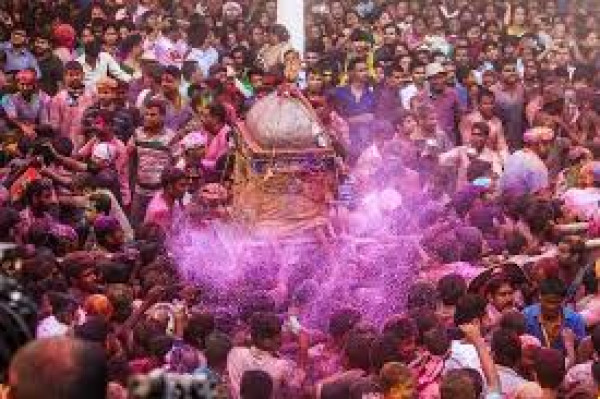
On this auspicious occasion, the murtis of Krishna and Radha are richly adorned with flowers and colors. The idol of Krishna, locally known as Kalia Gosain or Kolia Thakur, is carried in a decorated palanquin accompanied by music, conch shells and joyful chants of Hori Bola.
Traditionally:
-
Women participate in devotional singing and rituals
-
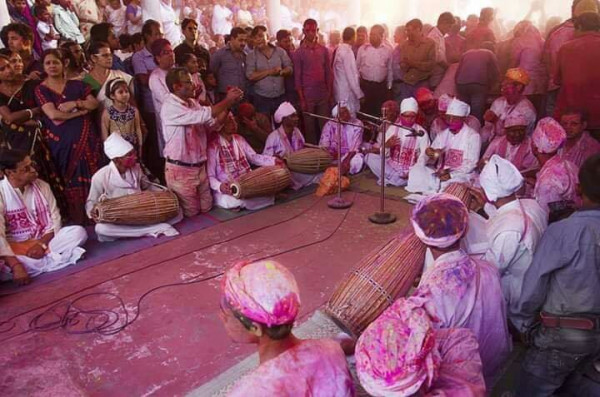
Musical instruments such as taal and dhulki accompany Holi geet
-
Colors are traditionally prepared from flowers
The celebration reflects the satriya culture of Assam and its deep spiritual foundation.
Holi Geet and Its Importance
One of the most beautiful aspects of Doul Utsav is the Holi geet composed by the 16th century saint Madhavdev.
Songs like Phagu khele karunamay and Phaku khele korunamoy are devotional melodies dedicated to Lord Krishna. These songs celebrate nature, love, and divine joy.
Holi geet are:
-
Devotional in nature
-
Sung collectively with enthusiasm
-
Accompanied by cymbals and traditional percussion
-
Rich in poetic imagery of spring and colors
They represent the emotional and spiritual core of the festival.
Cultural and Social Significance
Doul Utsav is more than a religious event. It is:
-
A symbol of Assamese cultural identity
-
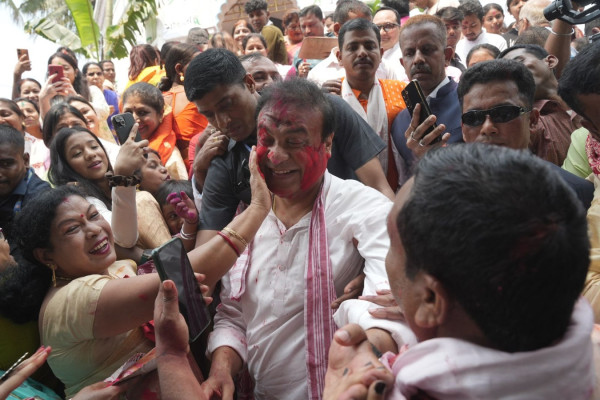
A celebration that unites people beyond caste, creed and religion
-
A major cultural tourism attraction
Barpeta town, located around 90 kilometers northwest of Guwahati, is known as Satra Nagari or Temple Town of Assam. Its unique style of celebrating Holi draws visitors from across India and abroad.
The festival strengthens community bonds and promotes social harmony, making it one of the most significant spring festivals in Assam.
How to Attend Doul Utsav in Barpeta
The festival is celebrated annually in March.
Barpeta Doul Utsav 2026 will be held from 4th to 7th March.
How to reach:
-
By Road: Connected via National Highway 31 through Howley and NH 427 via Hajo-Doula Shal
-
By Rail: Nearest railway station is Barpeta Road
-
By Air: Lokpriya Gopinath Bordoloi International Airport, Guwahati
-
By River: Nearest port is Dhubri
Visitors are advised to reach early due to heavy footfall during the main days.
Conclusion
Holi or Doul Utsav in Assam is a rare blend of devotion, folklore, music, ritual and vibrant celebration. Centered at Barpeta Satra, it preserves centuries-old Vaishnavite traditions while strengthening community unity.
From Meji bonfires to Holi geet, from idol processions to phaku-guri colors, Doul Utsav reflects the soul of Assam in spring. It is not merely a festival of colors but a festival of faith, culture and belonging.