Introduction: A Cultural Heritage Written on Bark
Assam's cultural identity is often associated with Bihu, Muga silk, and Kamakhya Temple. Yet one of its most refined and intellectually rich traditions lies in Sanchipat manuscript painting. Developed between the 16th and 19th centuries, this art form combined literature, devotion, and visual storytelling on the bark of the Sanchi tree.
These illustrated manuscripts, known as Puthi-Chitra, were created primarily in Vaishnavite monasteries called Satras. They served not only as sacred texts but also as visual interpretations of spiritual philosophy and medieval Assamese life.
Early Historical References to Painting in Assam
The roots of painting in Assam trace back to ancient literary references. In the 7th century, King Bhaskaravarman of Kamarupa reportedly gifted panels for painting on Agaru bark to Emperor Harsha, as mentioned in Harshacharita. Mythological narratives also speak of Chitralekha of Sonitpura, known for her artistic skill in sketching figures from memory.
The earliest surviving illustrated manuscript in Assam is the Phung Chin manuscript dated 1473 CE, written in Ahom language and script. Its style shows Burmese and Southeast Asian influence, indicating cross-cultural connections long before the flourishing of the Neo-Vaishnavite movement.
The Neo-Vaishnavite Movement and Artistic Renaissance
The true flowering of manuscript painting in Assam began with the Neo-Vaishnavite movement led by Srimanta Sankardev (1449–1568). He believed that art could make spiritual teachings accessible to common people.
Instead of idol worship, the movement emphasized sacred texts and moral development. Satras became centers of art, literature, music, dance, and painting.
It is believed that Sankardev himself painted the seven celestial worlds for his theatrical performance Chinha Yatra. This marked the beginning of a visual tradition that blended devotion with artistic expression.
By the 16th and 17th centuries, copying and illustrating manuscripts became widespread across Assam.
Materials and Techniques: The Science Behind Sanchipat
The uniqueness of Assamese manuscript painting lies in its materials and preparation methods.
Sanchipat and Tulapat
Two primary surfaces were used:
-
Sanchipat: Made from the bark of the Sanchi tree (Aquilaria agallocha). The bark was cured, smoked, seasoned, and polished to create a durable writing surface.
-
Tulapat: Prepared by pressing cotton into sheets.
The preparation process was meticulous, ensuring that manuscripts could last for centuries.
Ink and Colours
The ink, known as Mahi, was prepared using natural ingredients such as silikha (Terminalia citrina), bull's urine, amlaka, and soot. The durability of this ink is remarkable, as many manuscripts remain clearly legible today.
Natural pigments included:
-
Hengul (red, mercury sulphide)
-
Haital (yellow, arsenic sulphide)
-
Indigo (blue)
-
Khorimati (white clay)
-
Soot or ash (black)
Brushes were made from animal fur, and artists demonstrated extraordinary control and precision.
The Khanikars: Custodians of the Tradition
The artists responsible for these paintings were called Khanikars. They were often clerics associated with Satras and were trained in multiple art forms, including wood carving and theatrical makeup for Bhaonas.
Due to religious humility, many Khanikars did not sign their works. Their devotion to spiritual service was considered more important than personal recognition.
Major Schools of Assamese Manuscript Painting
Scholars classify Assamese manuscript painting into different schools:
Sattriya School
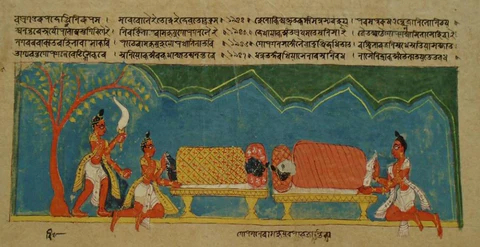
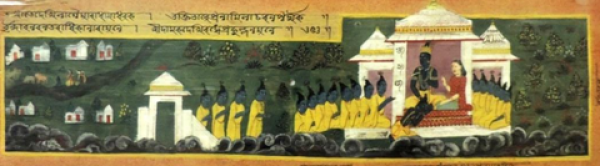
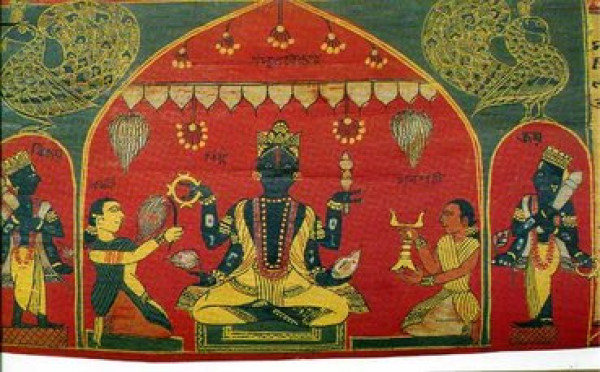
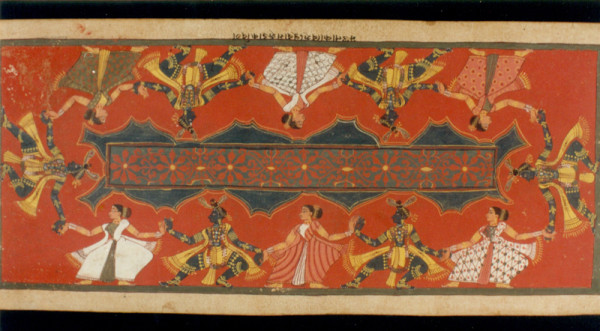
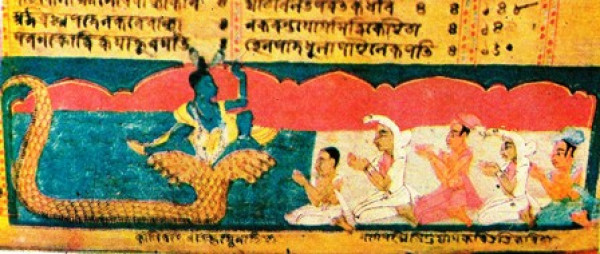
Developed within Vaishnavite monasteries, this is the earliest and most prominent style. It features angular postures, strict profile faces, strong contour lines, and flat compositions. The background is often monochrome red or blue, with simple decorative landscapes.
Themes include Bhagavata Purana, Ramayana, Mahabharata, and Krishna Leelas.
Ahom Court Style (Rajghariya Style)
During the 18th century under Ahom rule, a refined court style emerged. Influenced by Mughal and Rajasthani traditions, this style used muted tones such as olive green, mauve, grey, and pink.
Kings like Rudra Singha and Siva Singha patronized this sophisticated artistic movement.
Darrang School
This regional variation developed in the Darrang region and reflected a more folk-oriented approach. It was likely patronized by local rulers such as King Krishnanarayana.
Tai-Ahom Style
Influenced by Upper Burma, this style includes manuscripts like Phung Chin and Suktanta Kyempong. It reflects Southeast Asian artistic traditions and forms an important early layer in Assam's painting heritage.
Themes Beyond Religion
Although religious texts dominated, Assamese manuscripts also included:
-
Buranjis (royal chronicles)
-
Vamsavali (genealogies)
-
Charitra puthis (biographies of saints)
-
Treatises like Hastividyarnava (on elephants)
-
Ghora Nidana (on horses)
The famous Hastividyarnava (1734 CE), written by Sukumar Barkath and illustrated under the patronage of King Siva Singha, remains one of the finest secular manuscripts in Assam.
Some manuscripts were even wrapped in cobra skins, especially those dedicated to Manasa Devi.
Distinct Artistic Characteristics
Assamese manuscript paintings have defining features:
-
Horizontal narrative progression
-
Flat composition without perspective
-
Emphasis on symmetry and group movement
-
Limited concern for anatomical realism
-
Strong contour lines
-
Dramatic storytelling
Unlike Mughal painting, depth and three-dimensional space are largely absent. Instead, scenes unfold sequentially on a single plane.
Border-decorated manuscripts known as Lata-Kata Puthi show Mughal influence in margin illumination.
Decline of the Tradition
The decline began in the late 18th century due to:
-
Moamoria rebellion (1769)
-
Burmese invasions (from 1817)
-
Fall of Ahom rule in 1826
-
Introduction of printing technology in 1836
-
Loss of royal patronage
-
Floods and climate damage
With printed books becoming accessible, manuscript production gradually decreased. However, handwritten religious manuscripts continued in some Satras.
Present Status and Revival
Today, only a handful of artists practice traditional manuscript painting in Assam. Some are associated with Satras, while others learned independently through research and experimentation.
Modern artists:
-
Reproduce classical paintings
-
Create new mythological and contemporary themes
-
Conduct workshops and classes
-
Use canvas and cloth due to limited availability of sanchipat
-
Maintain traditional colour schemes even when using synthetic pigments
Institutions and scholars have helped preserve and catalogue manuscripts. Artists remain hopeful that wider awareness and promotion will revive this heritage.
Conclusion
Sanchipat manuscript painting is not merely a visual art form. It is a testament to Assam's spiritual depth, literary richness, and artistic sophistication. From bark preparation to vibrant natural colours, from devotional themes to royal chronicles, this tradition reflects centuries of intellectual and cultural continuity.
As efforts toward preservation and revival grow, this timeless art form continues to represent the soul of Assamese culture.