Assam Gibbon Makes Historic Railway Crossing Through Canopy Bridge
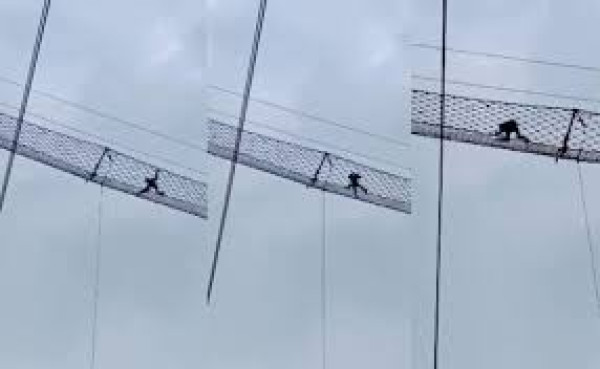
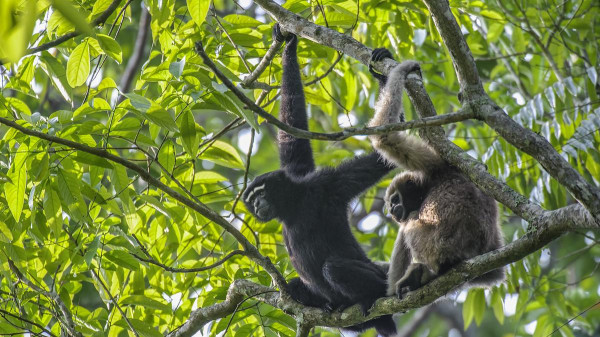
In a remarkable achievement for wildlife conservation in India, a Western Hoolock Gibbon has successfully crossed a specially constructed canopy bridge above a railway line in Assam. The historic event was recorded at the Hollongapar Gibbon Sanctuary in Jorhat district and is being recognised as the first documented case anywhere in the world of a gibbon using a man-made canopy bridge over an active railway track.
The breakthrough has brought global attention to Assam's conservation efforts and highlighted the importance of science-based solutions for protecting endangered wildlife species.
Historic Event Recorded in Assam's Hollongapar Gibbon Sanctuary
The crossing took place inside the famous Hollongapar Gibbon Sanctuary, one of the most important habitats for the Western Hoolock Gibbon in India. The sanctuary is located in Assam's Jorhat district and is known for its rich biodiversity and dense forest canopy.
For years, the Lumding-Dibrugarh railway line passing through the sanctuary created a serious challenge for arboreal animals. Since hoolock gibbons spend nearly their entire lives in trees and rarely descend to the ground, the railway line fragmented their natural habitat and disrupted movement between forest patches.
Wildlife experts warned that such habitat fragmentation could threaten the species by limiting movement, reducing genetic diversity, and increasing risks to survival.
Canopy Bridge Becomes a Conservation Success
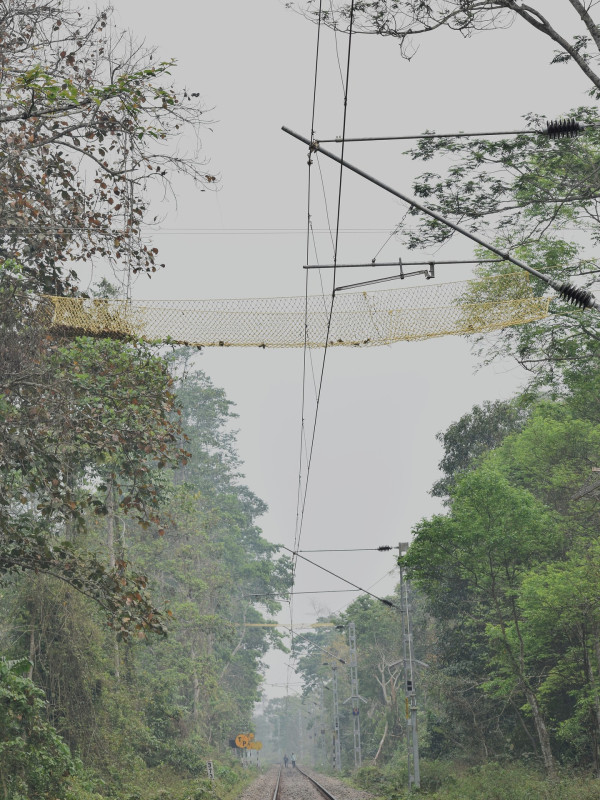
To reduce the impact of railway electrification work and habitat disruption, specially designed canopy bridges were installed above the railway line earlier this year. The initiative was carried out with the involvement of the Jorhat Forest Division and the Wildlife Institute of India (WII).
The bridges were built using strong double-rope structures fitted with safety nets, allowing tree-dwelling animals to move safely from one side of the forest canopy to the other without touching the ground.
After months of monitoring, forest officials recorded an adult male Western Hoolock Gibbon confidently using the canopy bridge to cross the railway line. The successful crossing has now become a major example of how small but carefully planned conservation measures can protect endangered wildlife.
Why the Event is Important for Assam GK and Current Affairs
This historic development is highly important for Assam GK, environment studies, and current affairs preparation because of several key reasons:
World's First Recorded Railway Canopy Crossing by a Gibbon
Wildlife researchers confirmed that this is the first documented case globally of a gibbon using a canopy bridge built above a railway line.
India's Only Ape Species
The Western Hoolock Gibbon is India's only ape species. It is listed as Endangered on the IUCN Red List and is mainly found in Assam and other northeastern states of India.
Important Habitat in Northeast India
The Hollongapar Gibbon Sanctuary is internationally recognised for protecting hoolock gibbons and other rare species such as the Bengal slow loris.
Example of Tech-Led Conservation
Union Environment Minister Bhupender Yadav described the initiative as an example of "tech-led conservation" and praised the use of scientific methods to reduce the impact of infrastructure development on wildlife.
Threats Faced by Western Hoolock Gibbons
Despite this success, the Western Hoolock Gibbon continues to face several threats across its natural habitat. Rapid deforestation, expansion of tea gardens, forest encroachment, habitat fragmentation, and illegal wildlife trade have severely affected the population of this endangered primate.
The species is found mainly in forested regions south of the Brahmaputra River and east of the Dibang River. It is also distributed across parts of Bangladesh and Myanmar.
Because hoolock gibbons are completely dependent on connected tree canopies for movement and survival, even small breaks in forest cover can create major risks for the species.
Need for Long-Term Conservation
Wildlife experts have stated that although the successful canopy bridge crossing is a major milestone, long-term conservation efforts are still necessary to secure the future of the species.
Conservationists emphasise the importance of reconnecting fragmented forests through reforestation, eco-sensitive infrastructure planning, and wildlife-friendly development projects. Maintaining continuous forest corridors will remain critical for the survival of arboreal species like hoolock gibbons in Northeast India.
The successful railway canopy bridge crossing in Assam has now become a symbol of innovative conservation and offers hope for protecting endangered wildlife through sustainable development practices.